Day 5 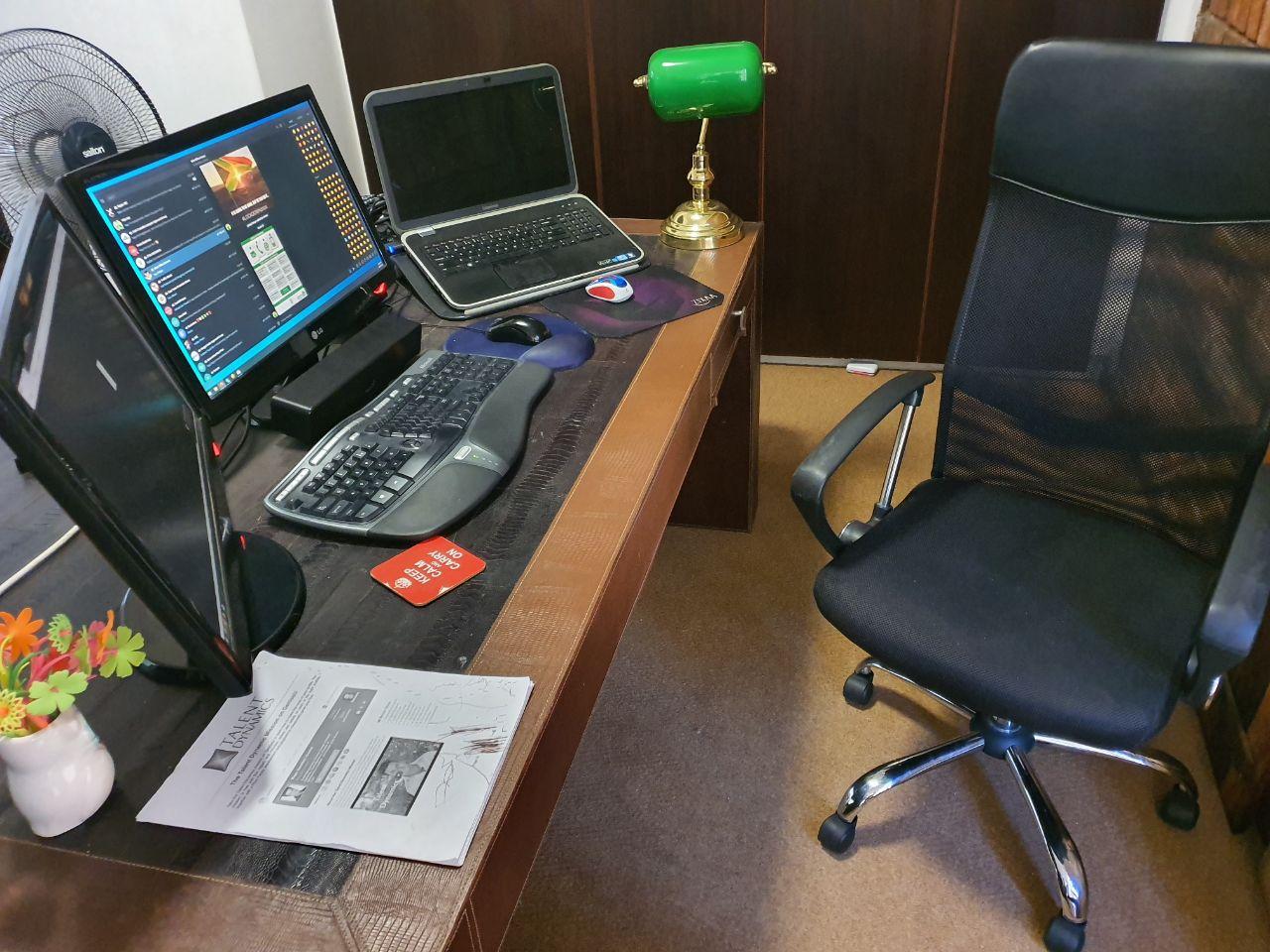 LockDown
31 March 2020
1 326 cases
Recovered: 31
Deceased: 3
Working from home seems like a dream come true, but in reality it comes with a plethora of challenges. First and foremost my twins. They are not used to being at home all the time, and certainly not having mommy at home all to themselves all the time. They are demanding, noisy, playful and want attention. All. The. Time.
It is challenging to call clients with loud children’s voices in the background. I am struggling to hear my clients, and the twins don’t understand when I am busy on the phone, I am working. They want to be part of the conversation. “Mommy, who are you talking to?”
It is challenging to work on my machines – the twins want to type on the keyboard, watch anything on either my phone or youtube, and generally don’t want me in the office at all. At home usually means playtime or storytime, and they just don’t get the shifted routine.
It is challenging to focus to do research for ourselves, on behalf of clients, on current solutions, on future solutions, on any solutions. The twins are relentless in their pursuit of my time, and my attention.
Then, my cats and dogs. Not as challenging – the cats at least are pretty soundless and I’ve now confined them to the catio, but the barking! Between the twins shouting and the dogs barking, I am trying to find a way to have conference meetings that have some sort of structure to them.
It is very challenging to have to go out (have now been out twice, feeling very badass and as if I need a German Shepherd by my side, and a stick of some sort), because I have never gone out without taking the twins with me, and now I have to leave them behind, tearful and angry at me.
Last night our President addressed us again as a nation. He looks tired, but he is strong in his resolve. He pleads that we stick to the lockdown rules, that we hold the line. In our country, although some of us have been staying home for longer than lockdown (our children’s school closed some time ago already, and I’ve only been going out when necessary since then), our government payouts only happened yesterday, which means our actual countrywide lockdown only started today. Privilege is even more apparent now than ever, and it is heartbreaking.
The Covid-19 spread is growing exponentially, which is really really hard to understand because of the speed at which it grows. The best way the mind-boggling figures make sense to me, is when I think of an old fable I read many years ago. I found a recent explanation of it here. A great emperor offered the inventor of chess any reward that he wanted. The inventor asked that a single grain of rice be placed on the first square of the chessboard. Then two grains on the second square, four grains on the third, and so on. Doubling each time. The king, baffled by such a small price for a wonderful game, immediately agreed, and ordered the treasurer to pay the agreed upon sum. A week later, the inventor went before the king and asked why he had not received his reward. The king, outraged that the treasurer had disobeyed him, immediately summoned him and demanded to know why the inventor had not been paid. The treasurer explained that the sum could not be paid – by the time you got even halfway through the chessboard, the amount of grain required was more than the entire kingdom possessed. So initially, Covid-19 infection figures look deceptively small, but with exponential growth, it is tough to guess which way the graph is going. Here’s a pretty cool video that illustrates how it works.
And then lastly for today, there’s this:
The acclaimed Italian novelist Francesca Melandri, who has been under lockdown in Rome for almost three weeks due to the Covid-19 outbreak, has written a letter to fellow Europeans “from your future”, laying out the range of emotions people are likely to go through over the coming weeks.
I am writing to you from Italy, which means I am writing from your future. We are now where you will be in a few days. The epidemic’s charts show us all entwined in a parallel dance.
We are but a few steps ahead of you in the path of time, just like Wuhan was a few weeks ahead of us. We watch you as you behave just as we did. You hold the same arguments we did until a short time ago, between those who still say “it’s only a flu, why all the fuss?” and those who have already understood.
As we watch you from here, from your future, we know that many of you, as you were told to lock yourselves up into your homes, quoted Orwell, some even Hobbes. But soon you’ll be too busy for that.
First of all, you’ll eat. Not just because it will be one of the few last things that you can still do.
You’ll find dozens of social networking groups with tutorials on how to spend your free time in fruitful ways. You will join them all, then ignore them completely after a few days.
You’ll pull apocalyptic literature out of your bookshelves, but will soon find you don’t really feel like reading any of it.
You’ll eat again. You will not sleep well. You will ask yourselves what is happening to democracy.
You’ll have an unstoppable online social life – on Messenger, WhatsApp, Skype, Zoom…
You will miss your adult children like you never have before; the realisation that you have no idea when you will ever see them again will hit you like a punch in the chest.
Old resentments and falling-outs will seem irrelevant. You will call people you had sworn never to talk to ever again, so as to ask them: “How are you doing?” Many women will be beaten in their homes.
You will wonder what is happening to all those who can’t stay home because they don’t have one. You will feel vulnerable when going out shopping in the deserted streets, especially if you are a woman. You will ask yourselves if this is how societies collapse. Does it really happen so fast? You’ll block out these thoughts and when you get back home you’ll eat again.
You will put on weight. You’ll look for online fitness training.
You’ll laugh. You’ll laugh a lot. You’ll flaunt a gallows humour you never had before. Even people who’ve always taken everything dead seriously will contemplate the absurdity of life, of the universe and of it all.
You will make appointments in the supermarket queues with your friends and lovers, so as to briefly see them in person, all the while abiding by the social distancing rules.
You will count all the things you do not need.
The true nature of the people around you will be revealed with total clarity. You will have confirmations and surprises.
Literati who had been omnipresent in the news will disappear, their opinions suddenly irrelevant; some will take refuge in rationalisations which will be so totally lacking in empathy that people will stop listening to them. People whom you had overlooked, instead, will turn out to be reassuring, generous, reliable, pragmatic and clairvoyant.
Those who invite you to see all this mess as an opportunity for planetary renewal will help you to put things in a larger perspective. You will also find them terribly annoying: nice, the planet is breathing better because of the halved CO2 emissions, but how will you pay your bills next month?
You will not understand if witnessing the birth of a new world is more a grandiose or a miserable affair.
You will play music from your windows and lawns. When you saw us singing opera from our balconies, you thought “ah, those Italians”. But we know you will sing uplifting songs to each other too. And when you blast I Will Survive from your windows, we’ll watch you and nod just like the people of Wuhan, who sung from their windows in February, nodded while watching us.
Many of you will fall asleep vowing that the very first thing you’ll do as soon as lockdown is over is file for divorce.
Many children will be conceived.
Your children will be schooled online. They’ll be horrible nuisances; they’ll give you joy.
Elderly people will disobey you like rowdy teenagers: you’ll have to fight with them in order to forbid them from going out, to get infected and die.
You will try not to think about the lonely deaths inside the ICU.
You’ll want to cover with rose petals all medical workers’ steps.
You will be told that society is united in a communal effort, that you are all in the same boat. It will be true. This experience will change for good how you perceive yourself as an individual part of a larger whole.
Class, however, will make all the difference. Being locked up in a house with a pretty garden or in an overcrowded housing project will not be the same. Nor is being able to keep on working from home or seeing your job disappear. That boat in which you’ll be sailing in order to defeat the epidemic will not look the same to everyone nor is it actually the same for everyone: it never was.
At some point, you will realise it’s tough. You will be afraid. You will share your fear with your dear ones, or you will keep it to yourselves so as not to burden them with it too.
You will eat again.
We’re in Italy, and this is what we know about your future. But it’s just small-scale fortune-telling. We are very low-key seers.
If we turn our gaze to the more distant future, the future which is unknown both to you and to us too, we can only tell you this: when all of this is over, the world won’t be the same.
© Francesca Melandri 2020
 faikonta