Mornings happen to other people… Do they?

I used to be a very reluctant morning person. Come time for the sun to peek over the horizon, all bright-eyed and bushy-tailed and raring to go, my brain would do what it was supposed to do the previous night – shut down and go into sleep mode.

I would try various tactics – self-talking by telling myself everything I had to do, and that I had to get up to set a good example to the staff (in Botswana I used to work for a media moghul called Mr Jones who was at the office at the crack of dawn, and left late at night after the last staff had gone home, and he was 70!) I would threaten myself, promise rewards to myself, motivate myself with various wake-up audios – all to no avail.

Then I discovered NLP, and most importantly, limiting beliefs. Here is one really good definition about what beliefs are: Beliefs are convictions or acceptances that certain things are true or real. They are generalisations about the world. They are our on/off switches about whether we can do anything. They are conscious enough to be valuable. NLP says that the beliefs that we hold give us both strength and empowerment. So, it becomes important to have the belief that can enhance your ability rather than restricting it.

I took my limiting belief (I am not a morning person) to an NLP session while I was still studying some of the techniques, and I was amazed at how quickly this belief changed. In a single session, using NLP techniques, the root cause of my limiting belief was determined, and it was replaced by a new empowering belief.
I am now not only a morning person, but I am an all day person. I can function at optimal level when required, and I can rest when I feel like it, and when it is necessary.
 
As an NLP Master Practitioner, I can help you make the same changes to your world. What limiting beliefs are holding you back from realising your full potential? Let’s challenge these beliefs, and let’s replace them with beliefs that serve you.

Emotions… Are you the puppet? Or the puppet-master?

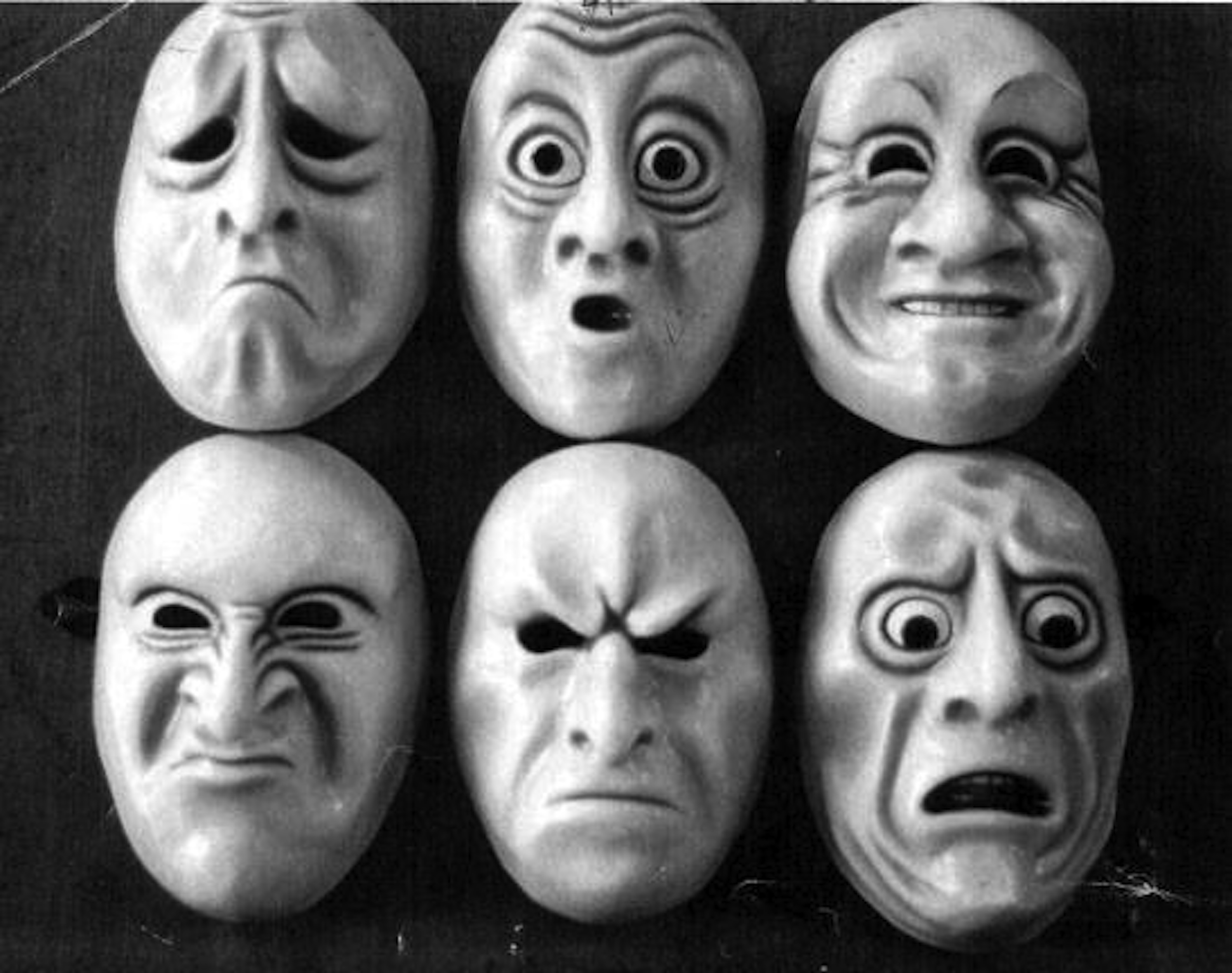
Our emotions allow us to have a giddy rollercoaster ride of sensations – from happiness to sadness, from elation to anger. Often referred to as the barometer of the soul, emotions are the filters through which we experience our world.

Image

Different people define emotions in different ways. Some make a distinction between emotions and feelings saying that a feeling is the response part of the emotion and that an emotion includes the situation or experience, the interpretation, the perception, and the response or feeling related to the experience of a particular situation.

“Emotions are human beings’ warning systems as to what is really going on around them.  Emotions are our most reliable indicators of how things are going on in our lives.  Emotions help keep us on the right track by making sure that we are led by more than the mental/ intellectual faculties of thought, perception, reason, memory.” – Dr. Maurice Elias

“Emotions operate on many levels.  They have a physical aspect as well as a psychological aspect.  Emotions bridge thought, feeling, and action – they operate in every part of a person, they affect many aspects of a person, and the person affects many aspects of the emotions.” – John D. (Jack) Mayer

When we allow our emotions to control our actions, then we become puppets. We can “surf the wave”, ride out emotions (especially negative emotions such as anger, sadness, fear, hurt, guilt, shame) and take control of our reaction to these. So often we find that people place blame for actions outside of themselves: “She ‘made’ me angry, so I lost control.” Lost control of what? How specifically did she “make” you angry?

We can take control of our emotions. We can experience the emotions fully, and if we don’t like the result we see, especially with negative emotions, we can help you find the root case with Timeline Therapy, and release your negative emotions.

Emotions can control your thinking, behaviour and actions.  Emotions that are not felt and released but buried within can cause serious illness, including cancer, arthritis, and many types of chronic illnesses.  Negative emotions such as anger, sadness, fear, hurt, guilt, shame and depression cause chemical reactions in your body that are very different from the chemicals released when you feel positive emotions such as happy, content, loved, accepted.

Your emotions should serve you – you should not be a servant of your emotions. Become the puppet-master in your world. Make a commitment today to yourself to become emotionally healthy. It takes a lot of wisdom to realise that nobody can make you do anything, nobody can change you. And neither can you make anybody else do anything, or even change them. Avoid those situations that you know will create conflict and upsets.  You cannot change others, you can only change yourself.

Do something extraordinary TODAY

Each one of us has a bucket list, a wish list, a to-do list. We have lists of dreams of what we want to do, what we want to accomplish, where we want to go, what we want to see, to hear, to experience. The sad thing is that these lists are all filed away somewhere, to be accessed every now and again, looked at, and put away until ONE DAY where we’ll have time for such things.

Image

When is your one day? When will you ever have enough time? When will you have enough money? What is enough? And my final questions that I’d like you to ask yourself is: until then, until you’ve decided this is the day, how happy are you? What are you doing to pass the time until you allow yourself freedom from the race against time? Because, well, while you are waiting for enough money, or enough time, the clock is not standing still. You are getting older… Life is passing you by.

Image

My challenge to you today, dear co-inhabitant of planet Earth, is this:
Please take out your want-to-do list. Dust it off, and give it a place of honour where you see it every day. Take something on the list, and do it now. Do it today. You only have one life, you only have this chance to do what you want to do. One day, whenever it is, may be to late. Today is your day to do something EXTRAORDINARY. Do it.

NLP and Advertising

It really hit home when I noticed my last blog post on this site was in November, LAST YEAR. What happened that kept me away so long from one of my favourite passtimes, writing?

Well, I can tell you. Since November last year up to now I have been up to my eyeballs in books. I have been studying and immersing myself in NLP, aiming for my dream – my Master NLP Certificate and my Master Timeline Therapy Certificate. As with all things, it wasn’t just enough to know the skill sets, but I wanted to make them a part of me.

So towards the end of May, off we went to Egypt, where I had intense class and practical NLP with Sarah Merron from Fire Dragon Coaching – one of the greatest trainers I have come across. (And believe me, I have done numerous courses).


Since obtaining my Master NLP Practitioner Certificate, some people have asked me how I am going to be using this in our advertising agency. Well, this article by Steve Andreas explains some of the benefits of a knowledge of NLP with regards to copywriting, and I hope that you find time to read it.

But I will not be only using NLP in our agency. As a lifecoach, the NLP skill set is invaluable in assisting clients with various solutions. As a business coach, with NLP we can help transform your company. Contact me, and see how NLP can be of benefit to you.
Image

–by Steve Andreas

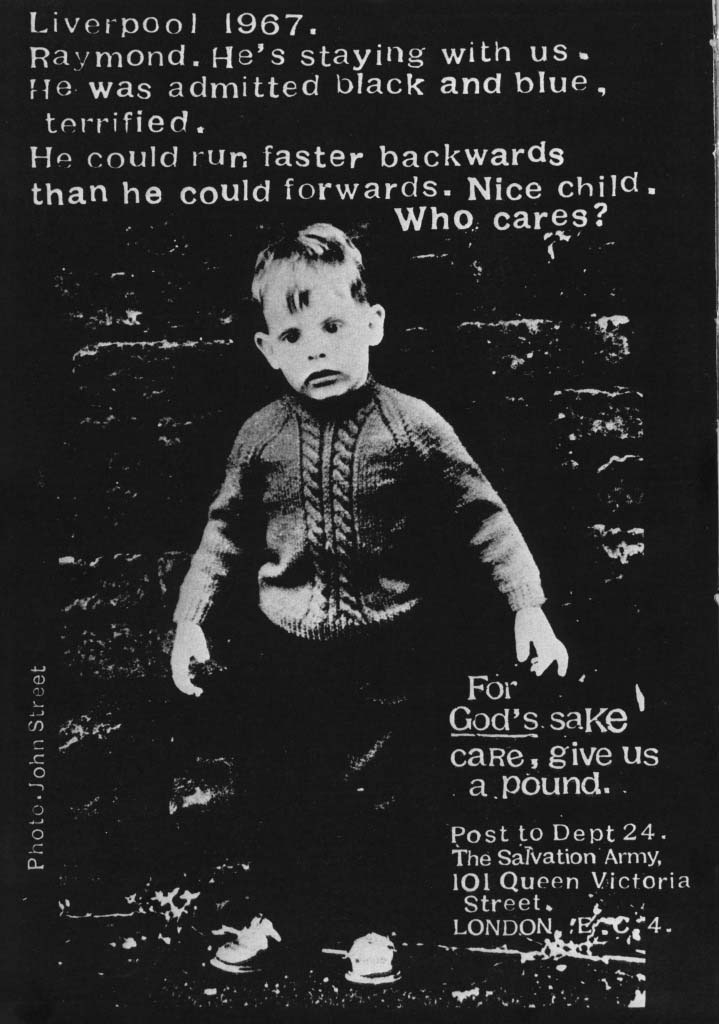
NLP in Advertising–Salvation Army Poster

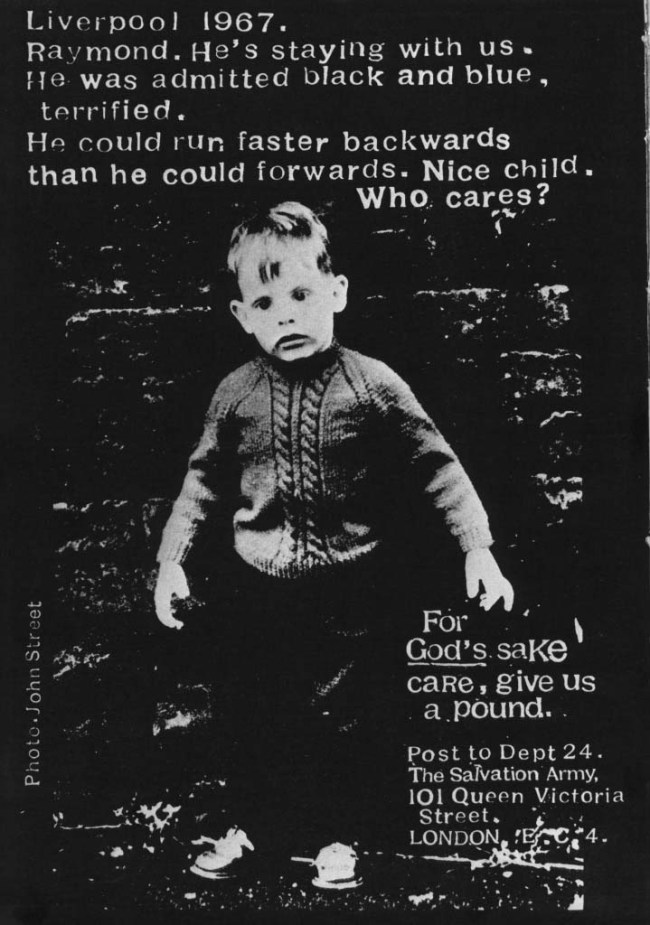
The poster shown above was used by the Salvation Army in the UK. The first version of the poster was exactly the same as shown above, except that the word “CARE” after the words, “For God’s sake” was omitted. This first version was very successful in raising a lot of money. Then they added the word “CARE” as shown above, and donations dropped precipitously. How did the addition of this one word ruin a great ad?

The image of the small child who looks very confused and in need of help is probably what first meets the eye for most people, eliciting a theme of need and a response of caring.

But the words are important, too, including the words on the top of the poster eliciting sympathy for the child. The statement that the child could run faster backward than forward is particularly unique and evocative. Elegant.

The typography is also relevant. Using letters of different fonts, irregularly placed, looks like whoever made the poster was also quite needy. (Imagine the same poster, but with slick, nicely aligned typography, and notice the difference in your response.) And the blotchy look of the photo and the poster as a whole echoes this.

“Nice child” adds an amplification; not only has the child suffered, but it is a nice child, who surely doesn’t deserve such treatment.

“Who cares?” is an rhetorical question that is covertly directed at the reader, and which most people will respond to—either consciously or un—with feeling caring or empathy, and an inner “I do”—a very graceful amplification of what the reader is already feeling in response to the previous image and words. Everything at the top and middle of the poster is congruent in expressing need and eliciting caring.

“For God’s sake, give us a quid,” is a simple command, and again the whole focus is on the needy child, congruent with the words at the top of the page, and the neediness implied by the haphazard typography, etc. So the whole message is very direct and congruent, focused solely on the child’s need. Very elegant.

However, when the last sentence was changed to “For God’s sake, CARE, give us a quid,” that one word changes the focus, diverting attention from the congruent message that has been so artfully established. Now it is two separate commands, directing the reader’s attention in two different ways:

“For God’s sake, CARE,” commands the reader to CARE, directing attention to the reader’s feelings, a shift AWAY from attention to the child’s need.

Then “Give us a quid,” directs attention to the child’s need again; but it is too late; the carefully woven spell has been broken. How? Not only by the interruption of “For God’s sake, CARE,” but because this command has an uncomplimentary implication—that the reader doesn’t already care.

If the poster assumed that the reader was already caring, there would be no need to command the reader to care. If we assume that the reader is a caring person who has been responding congruently to the poster’s multiple eloquent pleas, the command to CARE (CARE emphasized by CAPITAL letters, which is a bit crude or rude in itself) is something of an insult, and not likely to induce them to give. And it didn’t.



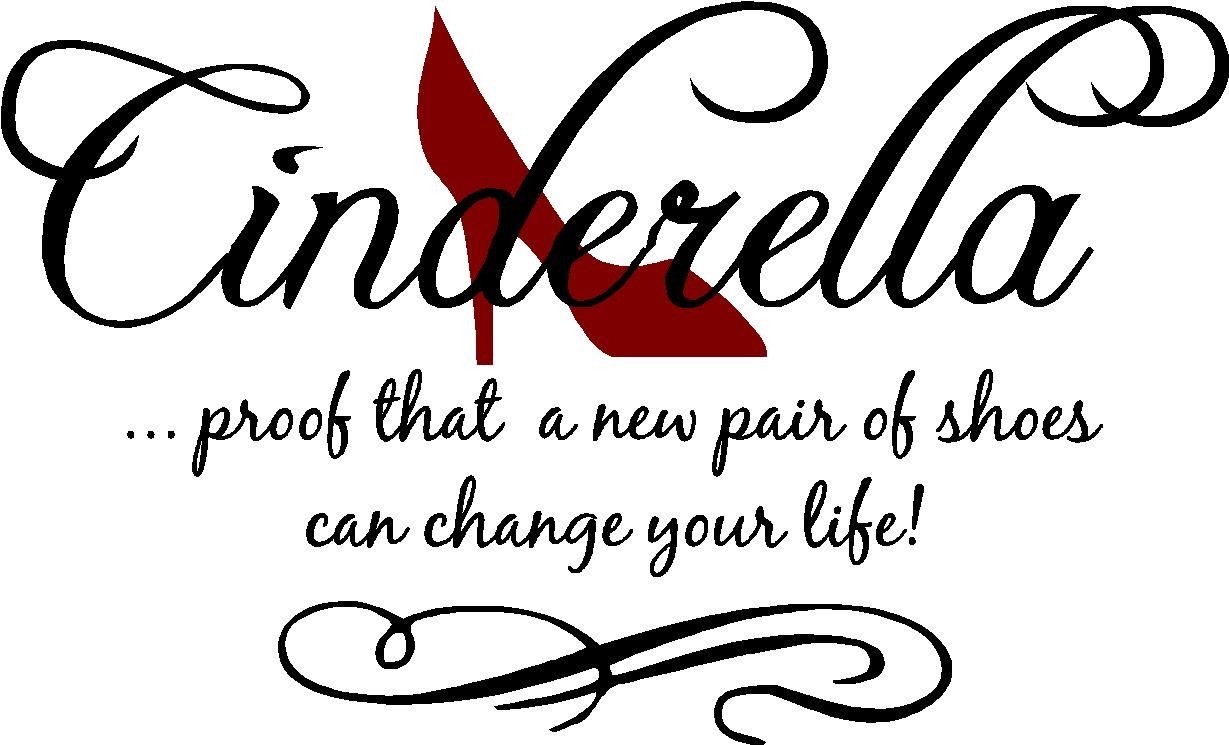
Cinderella is proof that a pair of shoes can change your life

I love shoes. In fact, love is not strong enough a word. I adore shoes. I find it very hard to walk past a pair of desirable heels, an often succumb to temptation, to my husband’s chagrin. Recently I discovered that I am not alone. There are shoe addicts out there that puts my meagre collection to shame.

Did you know that blonde “diva” Christina Aguilera has 750 pairs of shoes in which she could balance her men-ogled pins? Or that (in)famous Paris Hilton has lost count of how many she owns and believes it to be “somewhere in the region of 2,000”? And please let’s not forget the notorious Imelda Marcos, who – when she wasn’t sending planes from Manila to Australia to pick up some sand – was buying designer footwear: more than 1,000 pairs, according to Time magazine. It turns out, though, that the most shocking celebrity shoe-gatherer of all is someone that I haven’t even considered since I was a hormone-raging teen, when we shared battered copies of her books (and giggled over the sexy bits). Yes, it’s only Danielle Steel, who owns 6,000 pairs of Louboutins. That’s a lot of shoes for a woman who certainly spends more time at her keyboard than showcasing her shoes.

It doesn’t surprise me that one in four women would rather buy a pair of shoes than pay a bill. We don’t even have to discuss why – if you don’t understand, then you are not a shoe addict. Simple. One of my favourite shoe quotations is the title of this blog: Cinderella is proof that a pair of shoes can change your life.


I love the feeling of a new pair of shoes. My meagre earnings don’t stretch to purchasing Jimmy Choo or Louboutin (love those signature red soles). I do have my favourites though. I own some beautiful Tsonga shoes, and my justification for buying these, other than that they are awesomely beautiful and comfortable, is that I am supporting a job-creation initiative called “Thread of Hope“. I am passionate about community development, and do similar work with Heavenly Haven (on a much smaller scale).

I also really love Skechers – these are my indulgence. I own two pairs, and wear them on alternate days when I work and have to walk a lot (all the time). It doesn’t feel as if you wear anything at all, and my feet adore me for buying these. My New Balance sneakers I simply had to buy because of the colours. Shocking pink and turqoise – what a combination!  My Nine West shoes I only managed to buy because a shoe shop closed down in our local mall, and these exquisitely beautiful shoes were selling at a third of their normal price. I own a black and a brown pair, and have never looked back when I needed to dress in style for a network function or a corporate meeting.

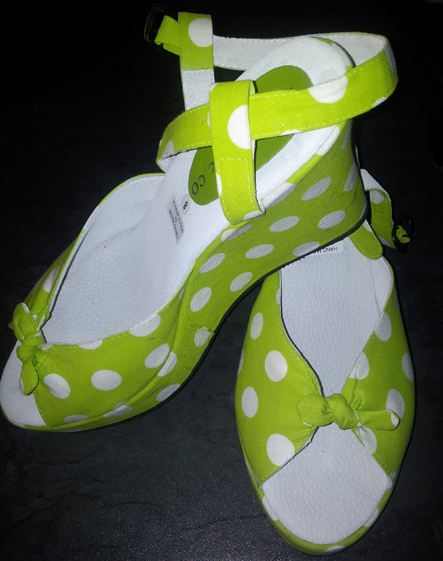
Recently, though, I discovered a local shoe designer, who makes outlandishly beautiful shoes. Her name is Lindsay Bennett, and she is the creator behind the Bennett & Co range. Just to give you an idea – this is my pair that I bought recently:

My poor office light doesn’t do justice to these lovely wedges. The shoes are also really affordable – my wedges cost me R450, which compares nicely to some of the other shoes I’ve been buying. These are, of course, my current favourites.

My shoe addiction is harmless – if I can’t afford it, I won’t buy it. I don’t buy shoes on account, and I certainly don’t buy shoes on a credit card (I don’t have one). I believe that an indulgence that makes you feel better about yourself and boosts your self-image is great, as long as it doesn’t get out of hand. I use my love of shoes to reward myself for tasks completed or goals achieved.

For now, we can all look forward to Halle Berry’s portrayal of a shoe addict in Shoe Addicts Anonymous (coming 2013).


Much ado about tomatoes!

I love making jams – I always have. As a little girl, I used to help my grandfather in our massive vegetable garden – we simply had loads of fig trees and rows of various vegetables. There is nothing that equals the taste of a ripe, sun-kissed fig freshly picked from the tree. Or a self-grown strawberry. And then there are tomatoes. It is the easiest of all to grow – in our own garden we are awed at the persistence of these little plants. Just scatter a few seeds, and in a few weeks you have results.

This weekend I made tomato jam according to my grandfather’s trusted recipe – it is very easy to follow. The fresh ginger can be substituted with bottled or even powdered, but as with everything, at the cost of taste. I used bottled lemon juice this time. Our lemon tree has caught a bug, so we are unable to use fresh lemons. I would recommend fresh lemons though.

5kg tomatoes
5kg sugar
5 finger-sized peeled chunks of ginger (cut into smaller pieces)
250ml of lemon juice

Cut a cross-section in the top of each tomato, then put the tomatoes in boiling water. This will make it easier to remove the skins. After removal, put the tomatoes in your pots. Add the ginger to the pots, and then share the lemon juice between your pots (quantity depends on the size of your pots). Top off with the sugar (again shared equally between the pots). Let the pots stand for two hours. This is what it should look like:


After two hours, put the heat on low until the sugar has melted. Now turn the heat on high, and the mixture will start bubbling, boiling away happily. This is what it should look like:

Continue boiling until the water from the tomatoes have evaporated, and the mixture starts looking a glossy red and translucent. Drop a teaspoon of the liquid into a bowl and tilt. If the liquid runs like jam, then you know that you are ready to bottle! Remember to remove the ginger before bottling, and to pre-wash the bottles and lids in boiling water.

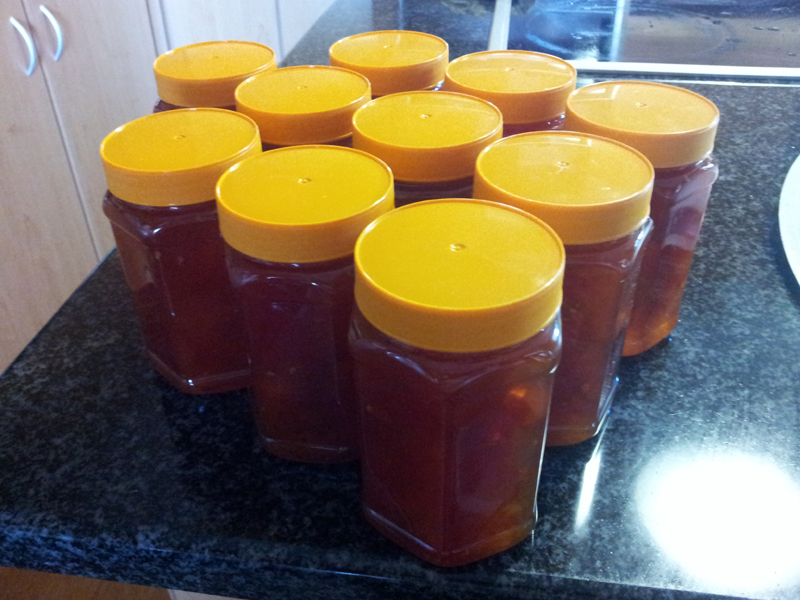
Finally, the finished product – hope you enjoy!

How many angels can dance on the head of a crochet needle?

I’ve always been addicted to wool. Give me a ball of yarn and a crochet hook and I will happily sit and churn out granny squares, which will then be converted into a blanket, a top, a scarf… the possibilities are endless. My husband is of the opinion that crocheting is for old people – this is, however, no longer so. Thank heavens that the ranks of the needle-crafters are swelling. Wool shops are flourishing and the crochet needle is back with a bang.

I’ve been exploring different crochet projects over the last couple of weeks, since we are currently teaching our Heavenly Haven moms wool-related skills, so that they can make items for reselling.

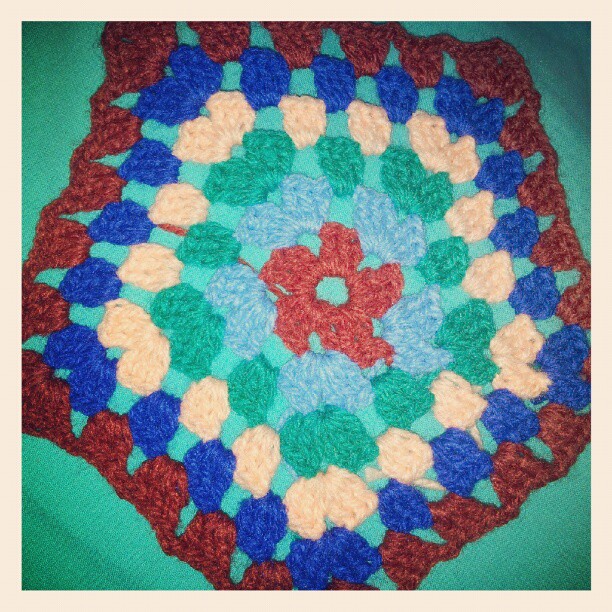
Teaching always starts with the basic “granny square”. This is a basic crochet square, in one colour or multiple colours (the latter, I think, is prettier). Here is an example:

A step up from the granny square, is the hexagonal:

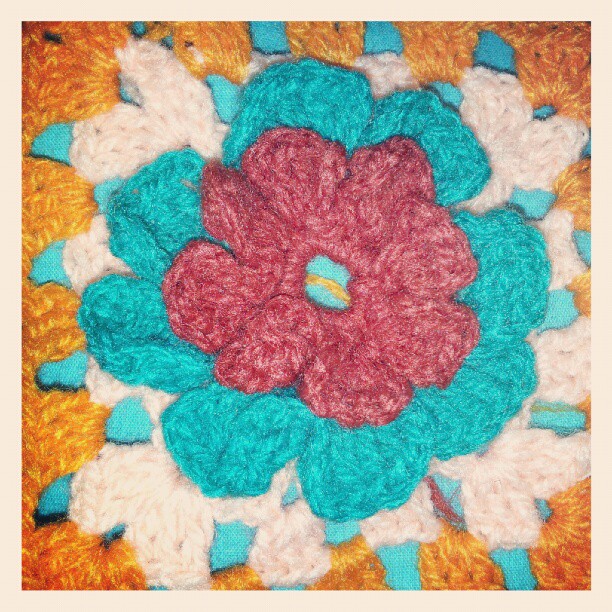
And then, my favourite – the frilly flower centre granny square (a tad more advanced, but great fun once you’ve mastered it):

The fun with all these squares is that you can complete any number of them, add them together, and have a lovely finished product. Watch this space for some photographs as the project develops!

When charity destroys dignity

I’m borrowing the title for my blog post from a well-known book: When Charity destroys Dignity – Glenn Schwartz. Although my post will be very different from the tone of the book (I read it and found it overbearing and difficult to process, but the title is certainly very striking and appropriate).

My husband and I work with a group of impoverished people in the Garden Route. These people are from all walks of life, and have one thing in common – poverty. Every day is a struggle for basic needs. Things we take for granted. Money for prepaid electricity, where the next meal comes from, warmth in winter and shelter at all times.

Our organisation is called Heavenly Haven, and we have a fairly updated facebook page: http://www.facebook.com/havenheavenly. We post regular updates on what we do and what we need. And daily we are confronted by an overwhelming awareness that what we are doing isn’t even minimising the tip of the iceberg.

Image

We love doing what we do, and we love seeing the smiles on especially the children’s faces when we arrive with food, clothes, toys – things that children should have.

And this brings me to the topic of this blog. Today one of my moms contacted me about her own father. He is in his late fifties, and he sleeps on a collection of crates in a small boarded room. She washes his clothes, and see his underwear crumble to rags in her hands. Her appeal to me was shy and tentative – she didn’t know how to ask.

I was asked for nappies by a mom who has a 2-month old baby. Again – not a demand. A shy appeal for help for her child.

A grandmother approached us and asked if we could help her with a set of teeth – she has a toothless, friendly smile. And again – it took her weeks to get the courage together to ask.

Our impoverished families have another trait in common – pride. These are ordinary people, with ordinary lives. They have ordinary needs, and are not used to asking for and accepting help. Often, especially our older people, they will rather starve than ask for food.

We must reach out in a loving way that preserves the dignity of people less fortunate than us. Our approach cannot be higher-handed or “know-it-all”. We must change our thinking so that our approach is almost from a heart who is blessed with the opportunity to be of service.

Heavenly Haven has many needs. We cannot look after our families on our own. We need food, we need clothes, we need willing hands to help, but above all, we need humble hearts who want to give with love.

An Introduction to Social Media Marketing and Internet Marketing

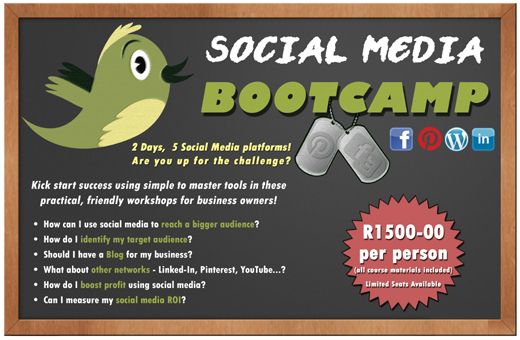
This isn’t a standard blog post, but a course outline of our upcoming social media bootcamp that we are launching in October 2012. Please feel free to contact us at the numbers or emails below for more details with regards to venues and dates near you.

Course Pre-requisites
–  Computer and Internet Literacy
–  Familiar with social media platforms like Facebook and Twitter
–  Laptop with Internet Connection for duration of Course
Course Materials Included
–  Digital course materials (Infographs and Social Media Marketing ebook)
–  Templates: Facebook Profile Image and Cover Image


Course: Day 1

–  What is Social Media and Internet Marketing and how would it benefit business?
–  Inbound Marketing vs. Outbound Marketing and under what category does Social Media and Internet Marketing fall?
–  Sociomapping and Sociograms: Identifying your target market (group) and analysing the preferences within the group.
–  Reaching your target market with Facebook: What does Facebook offer and why should I use it.
–  How-To (Practical): Setup a Facebook Page
–  How-To (Practical): Setup a Facebook Group

Assignment A: Identify your company or organisation’s target market / group and build a sociogram to represent Social relations,
channels of influence or lines of communication within your target market.

Assignment B: Create a Facebook Page and/or Group for your company or organisation and attempt to reach the target market identified in Assignment A
Course Day 2
–  Reaching your target market with Twitter: What does Twitter offer and why should I use it.
–  Reaching your target market with Linked-in: What does Linked-in offer and why should I use it.
–  Reaching your target market with Pinterest: What does Pinterest offer and why should I use it.
–  Reaching your target market with a blog: Why should I have a blog and a website, what are my options.
–  Optimising your blog content: Making sure your message maximises your marketing opportunity .
–  Reaching your target market through other social media platforms: What other options are there and when should I use it.
–  Why should I and How do I link it all together to maximise my inbound marketing potential.
–  Conclusion of Course.

Assignment C: Create a Linked-in profile for yourself and your for your company or organisation and attempt to reach the target market identified in Assignment A

Assignment D: Create a Pinterest profile for yourself and a board for your company or organisation and attempt to reach the target market identified in Assignment A

Assignment E: Create a blog your for your company or organisation and attempt to reach the target market identified in Assignment A

Assignment F: Time to link it all together.
Total Course Time: +/- 8 hours

For more information on this and other courses feel free to contact us today!

Jolindy Dreyer
B.A. Communications (UOFS) • NLP Prac. (FDA UK)
Cell: 082 780 9209
E-Mail: jolindy@dreycor.com
Facebook: www.facebook.com/roisocialmedia

Linked-In: www.linkedin.com/in/jolindy

Twitter: www.twitter.com/jolindydreyer
Zac Dreyer
B.Tech. Information Technology (UNISA)
Cell: 082 378 7386
E-Mail: zac@dreycor.com
Facebook: www.facebook.com/roisocialmedia

Linked-In: www.linkedin.com/in/zacdreyer

Twitter: www.twitter.com/zacdreyer

Why is social media one of the most important marketing tools?

If you are in business, then you are marketing your business. All business owners are (or should be) searching for the best or most important ways to market themselves, their products or their services. And of course, cost is always a factor. We understand that we have to spend money to make money, but we want to save money in the process.

I’ve been involved in social media marketing since before the concept was officially known as social media marketing. And this article is just my opinion on the matter – I would love to hear what you think.

Now, let’s get to the point. Why is social media one of the most important marketing tools?

Social media gives you a more direct path of contact between you and your market. Having a strong social network allows you to communicate effectively with existing and potential users. More “traditional” marketing tools allows for pretty much one-way communication, but with social media you can directly interact with your client base. One of the most important aspects of using social media as a marketing platform is the fact that you are able to access a massive market that would otherwise be inaccessible through traditional media (unless equally insane amounts of money are spent). Social media makes connecting with customers easy.

Now, even today, I am exasperated to hear clients say: “But I don’t use facebook (or twitter or google+ or….). I cannot see how it can be of value to my business to have a social media presence.” And my answer is: If you aren’t using social media yet, you’re missing out on a vast, untapped group of potential customers. These days, almost everyone is plugged in and connected online – Facebook has more than 900 million active users and Twitter has almost 300 million. Is this really a user base that you can afford to disregard?

What can social media do for your company?

Firstly, by actively using social media outlets such as Facebook, Twitter, Linkedin, Youtube, Pinterest, etc you can raise awareness of your company to a very large community. Just like placing a newspaper, radio or television advertisement, social media is an easy way to get your company name in front of peoples eyes.

Secondly, social networking connects your with a large chunk of active online users and can generate leads of all kinds for most businesses. You can tie awareness in with promotions and competitions, and run a very effective online campaign which can only benefit your business.

Once you’ve established your network, it doesn’t stay there. You constantly add new people, and you build relationships with your existing followers. Once you’ve established a connection or formed a relationship it is crucial that you maintain the correct impression. Relationships leads to sales.

Social media also allows you to improve your customers service. Because of direct communication, social media allows you to interact with potentially disgruntled customers and sort out any problems/issues that may exist. Social media also allows your happy customers to publicly share how satisfied they are doing business with you. This gives a whole new meaning to the concept “Word of Mouth”.

There are amazing tracking/monitoring tools available which allows you to access a valuable range of data about how people found you, who they are, how they came to view your website/social page, etc. With this info, you can work out the most effective ways to increase your social media network, adjust your campaign and capture your market.

In short, social media is a whole different way of looking at promoting your business. And if you look at how some of the larger brands embrace their ongoing social media campaigns, it can definately work for your business too.