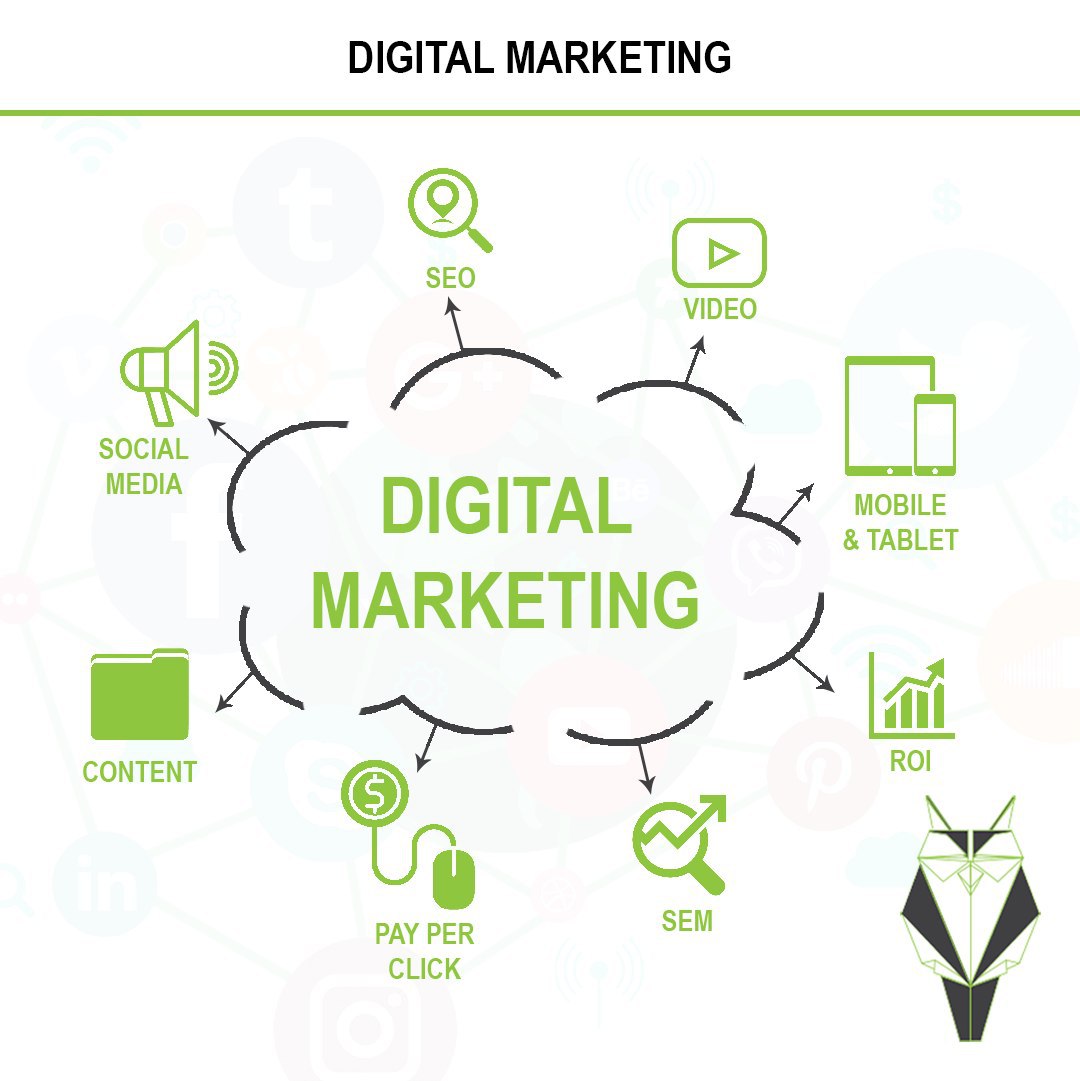
Let’s talk digital by Creative Touch: Can the real digital marketers please stand up?

Digital marketing

Let’s be frank – nobody wakes up in the morning and enthusiastically jumps out of bed, saying: I cannot wait to spend money on marketing and advertising my business today! In a perfect world, that would be great, because marketing is one of the cornerstones of a successful business. But is has become a grudge expense, something we resent paying and the first thing we want to scratch when the belt has to be pulled tighter.

Why? I’ve always asked myself. I am a passionate marketer, I’ve been in marketing all my life and I simply cannot see myself doing anything else. There is nothing like sitting down with a client, brainstorming ideas, seeing those ideas implemented, being a part of the action and seeing a positive difference of which I am privileged to be a part.

However, over the years I’ve seen a trend, starting when I owned my very first fledgling advertising agency and publishing company in Gaborone, Botswana. My father-in-law thought he could also do what us young, and to him, inexperienced folks, were doing. Our work didn’t look that hard (he didn’t see the long hours), and he decided to open a marketing franchise in a new town that they just moved to. It didn’t work, and he ended up closing it a couple of months later. When we discussed it later, he ruefully admitted that this was not for him.

Years later, in 2001, I opened a marketing and publishing agency in the Garden Route. I’ve had staff members over the years who worked for me, and after a couple of months decided they know it all, opened opposition to us, undercut our pricing and are selling a solution they really know nothing about. You cannot learn decades of knowledge and experience by watching what somebody does for a couple of months, and then also not stay updated by continuing to study. All. The. Time.

We find ourselves in an environment where people are unwilling to invest in real expertise and knowledge. Most businesses want a quick solution, and they want it cheaply. A plaster is not going to fix existing problems overnight. And charlatans and pretenders are unable to keep up the ruse, to discerning business owners who understand what ROI means and how to measure actual results. Unfortunately, there are many, many small businesses who DO NOT understand how the digital space really works and they are taken in.

Then there are the actual businesses owners who were taken in, and who are now disillusioned. They do not believe in marketing at all, least of all this newfangled thing they do not really understand, called digital marketing. They threw good money after bad, and are reluctant to repeat the experience.

There are many credible agencies out there, including ourselves, who take our clients’ investment in their marketing very seriously. There are a couple of red lights that one could keep an eye out for. Is the agency wanting to run with your marketing a legitimate business? Do they have offices, staff, the right background, equipment? Who are their other clients, and how long have those clients been with them? Are they trying to strong-arm you into a contract, or are they willing to work on a month-to-month basis, measuring regular feedback and results?

Speak to us for a free digital audit, where we can give you advise on what you currently have, where you are positioned digitally and how it can be improved. Or attend one of our social media seminars – I am passionate about teaching, and believe in sharing knowledge as knowledge is empowering. Visit our website: http://www.creativetouch.agency or email me direct: jolindy@besociable.co.za

Let’s talk digital by Creative Touch: Are Social Media Accounts the Property of my Business?

I thought long and hard about what the title of this article should be, and it is what it is. As a digital marketing company, we often come across clients who need assistance in marketing a business they just bought. They are all excited about having a social media presence, and getting us, Creative Touch South Africa, on board to sort it all out. More often than not, though, especially when buying over an existing business, there is already a social media presence. Now suddenly there is a dispute as to ownership of these platforms.

Look, it is really quite simple. When you buy a business, you buy it as a complete, operational entity. If you’ve been involved in the selling or buying of a business, you’ll know that when a business is sold there are different business assets that may be transferred as a part of the transaction to the purchaser during the sale.

Traditionally, transferred assets include the existing stock (if any), the equipment, vehicles (sometimes), furniture, supplier information and sometimes, client databases. Nowadays though, most businesses also have web pages and social media accounts that link directly to the business. These web pages and accounts contain information pertaining to the business, including addresses and contact numbers. There will be, on social media specifically, a creation date of the account, which also adds credibility as to how long the business has been online. There will also be existing analytics data, page fans, followers, etc. These are all assets from a marketing point of view. So now many business owners want to know whether these items count as the property of their business. The answer is yes, it is the property of the business. Which means when the business is sold, it stays the property of the business, like all the other assets, and should be transferred to the new owner.

There is sometimes a misunderstanding as to how to transfer ownership of social media accounts. In reality, it is very simple. It depends on what platform it is. Some accounts, such as Instagram, require a user name and password. Some accounts, such as Facebook, require an admin to be added to the page. Facebook can be tricky, because not everybody understands exactly how it works, and the platform used to also allow a business page to be run independently with its own user name and password. This has not been the case though for years, and Facebook business pages can only be accessed if a user is connected to the page via one of the admin roles.

Unfortunately, many people are under the perception because the business page is linked to their own personal profile, handing over the page will impact this. This is not the case at all. On Facebook specifically, you can have multiple “Admins” on a business page. There are other page roles available, such as “editor”, “analyst” and more – all of these roles have a place and a specific function. An owner though, should be “admin” as that gives full control over the page. There is a 7 day period during which a new admin cannot alter the role of any of the other “admins” or even remove them, you can only add. But as soon as the new admin is active, other admins can just remove themselves from the page. Be careful though, Facebook allows an admin to leave a page completely, which is then a headache of note to try and recover from “outside”. Also, if an admin leaves and the only roles left on the page are editors, there can be no new admins added, and an editor role cannot promote itself to the admin role. So be sure to transfer correctly, as the default role under the Page Roles section under Settings is “editor”.

Ideally, in a perfect world, a seller would make provision for the transfer of all the accounts, and keep the necessary user names and passwords secure to be handed over upon completion of the sale. If the seller chooses not to do this, and keep the accounts, there will now be duplicate accounts online, which will make marketing very difficult from a search engine point of view. How does the public know which account/page/channel to visit? If the seller chooses to deactivate all the accounts, this is again problematic, as it would mean that all of the followers and fans would be lost and the buyer would need to start from scratch. This would defeat the purpose of the buyer gaining access to the social media accounts if there is value and goodwill in the original accounts through existing social media pages and followers and subscribers.

The content of this article is intended to provide a general guide to the subject matter. Specialist advice should be sought about your specific circumstances with regards to social media accounts. Speak to the team at Creative Touch South Africa if you require any advice on this or other digital matters: info@creativetouch.agency