Regret is a non-splendoured thing

I got a call late yesterday morning- the one when the phone rings, you recognise the number, and your heart plummets in your chest, because news has not been good lately, and you dread what you’ll hear when you answer. My mother passed away. Just like that. My closest blood relative, the person who brought me into this world, who gave me life.

Yes, I understand the irony of how I feel. I am an adoptive parent. I did not want children for many years, because I had such a tumultuous and abusive relationship with my mother. I was worried that I might turn out the be the same kind of mother, and I’d wish that on no child. And by the time I knew better, and I really yearned for children of my own, this is the route that worked out for me.

Somehow people think when you’ve lost an estranged parent, it is ok. You didn’t have much of a relationship with them, so why be sad? It is much much more complicated than that. I didn’t realise I’d feel this overwhelming grief. I manage to get my tears under control, only for it to all start up again at a thought, a smell, a word. My way of dealing with emotions is to do something, to cook, to write, to make something.

It is tough growing up without a mother. I had a person in my life, who gave birth to me, but who was in no way what a mother personifies. There was no love, no nurturing, no hugs, no care. Today, I wonder if she didn’t have postnatal depression, and was never diagnosed. But that doesn’t explain the constant abuse. I was eventually removed by social workers into state care when I was fifteen, and pretty much made my own way from there. That was 30 years ago.

It goes beyond explanation, but I constantly went back to try and remedy the situation. When I matriculated, I begged for a lift, and I made my way to where she lived. I wanted to share with her that not only did I matriculate top of my class, but I also got a very rare and much-needed bursary to go to university. When I knocked, and she saw it was me, her exchange with me was bitter. She told me in no uncertain terms that I am nothing to her.

It is tough entering the adult world without a mother. I’ve always had caring people who stood in the place she should have been, but it is not the same. I envied girls who had easy access to a mom to teach them everything they needed to know about transitioning into an adult. How to wear make-up, how to handle suitors, how to wear jewellery, appropriate clothes for specific events. Someone to giggle with about silly things, someone to whisper my dreams to who gave me complete support. Someone who stood up for me when I couldn’t on my own, who took my side when I needed an ally, who anchored me when seas got rough.

So yes, I yearned for a mother. I constantly tried to reconnect, and when I got married, I went to introduce my new husband to my real family, so he could be under no misunderstanding as to my origins. Poor, and from the complete wrong side of the tracks. We actually ended up staying with them for a few days – things seemed to be going smoother.

When my marriage fell apart, I went to fetch my mother to come and stay with me for a few days. I really just needed comfort and companionship. Comfort she had no idea how to give, companionship, she tried her best. It felt as if we were cautiously feeling our way towards each other.

Over the years, depending on my own income, I’d send money, or help buy whatever was needed: a fridge, a stove, groceries, essentials. It reached a point where it started feeling my mother would just contact me when she needed money or when she needed me to get something for her.

Our fragile relationship shattered to pieces again when I reopened our old wounds, and tried to explore why she abused me so badly as a child. She denied completely that anything of the sort had happened, shut herself off from all communication, and I left, angry. We went back and forth like this for years, with me just wanting answers and to understand, and with her completely denying that anything of the sort had happened.

It took me having children of my own before I finally understood. I could not force my mother to love me, or to even give me any answers or closure. Also, I was not to blame for what happened to me as a child, I did not fail in any way. There is nothing I could have done better, or differently. I was a child, she was the adult. If I wanted any kind of relationship with her, it would have to be unconditionally.

Last year I packed up my twins and off we went to Queenstown for a visit over the festive season. I hadn’t seen my mother in fifteen years by then, and I was worried that the visit would be strained. And yes, of course it was. My mother could not make eye contact with me, and for the first couple of days she spoke to me via other people. Like: “Eddie, ask Jolindy if she wants coffee”, or “Imelda: I think Jolindy needs a chair.” But I could see she was trying. She kept an eye on me and when she thought I needed something, she’d get someone to sort it out. And I just went back, day after day, relentlessly.

By now, my mother could not walk properly. A hip replacement from many years ago started failing, and she was in line for a wheelchair. She smoked non-stop, and sat at their little kitchen table, from where she ran their little household. It was hard, to go sit at that table, all day, every day. I had brought lots of activities for the twins, and they were happy and entertained with puzzles and toys. But that time sitting at that table turned out to be most valuable. I let go of my questions about her motherhood and my childhood. I forgave her, and I embraced her as to who she turned out to be.

From there, I spoke to her almost every day telephonically, and the twins embraced her as “Ouma”. She loved it, and she told them she loved them. She couldn’t say it to me, but I could hear she wanted to. As to me, I struggled to articulate the word “Mom”. I’d avoid calling her anything, and structured my sentences to her so there was no form of address. It was hard, the word stuck in my throat. I am happy that during our last conversations I did manage to work it in.

My mother and Eddie were supposed to come and visit us at home in George over the Easter period. I had booked and confirmed their tickets, and we were all ready for them with planned treats and outings. She was so excited. A week before they would have come, she let me know that she got her wheelchair, and she would be able to be more mobile. Our Covid-19 figures started growing, and a travel ban was imposed, not only on international travel, but also on all domestic travel. We took it in our stride, and said as soon as all of this is over, we’ll have our visit. It was her birthday three weeks ago – she still reminded me, as if I’d ever forgot. April 10, every year, I have always thought of her in some way. This year I bought her a much-coveted tea set, that we were going to put in their bedroom as a surprise when they came.

The call that she was hospitalised happened just over a week ago. I frantically called the hospital for more detailed news, because my mother’s husband, Eddie, seemed to have no idea what was happening, and my brother, Jan, was in a state. I could get no information, because I could not verify telephonically that I am next of kin. The hospital explained I have to be there in person. There was no way I would be allowed to travel, the country was in the middle of our most severe level 5 lockdown, and my mother was hospitalised in another province. The police just said no to a travel permit, funerals only. I might now to be allowed to travel, as soon as a death certificate is issued, I’ll have to apply. I tried yesterday with our documents and an affidavit, but it was a firm no.

A kind doctor finally got back to me and explained the severity of the situation. Stage 5 cancer, very aggressive. A stroke as well. My mother was in a lot of pain and unable to speak. Swollen hands, unable to hold a phone. I had to communicate via Eddie. Due to a broken car and financial issues, he could also not visit her daily, so updates were few and far between. The prognosis looked bleak. I did not know when she had been discharged, the last I heard from the hospital, my mother was supposed to go by ambulance to the nearest oncology clinic.

And now, she has passed away. Peaceful, it seems, in bed, next to her husband, in the small hours of the morning. I never got to say goodbye, or to even hug her. I don’t know what she would have made of a hug, she was not really a demonstrative person. There will be no more chances for further reconciliation, no more time just sitting with her, quietly listening to her, talking about inconsequential stuff, but talking. Eddie told me she could not stop talking about our visit over Christmas. It was all she wanted, it gave her peace. I regret not having let go of my resentment years ago, and just letting us develop an adult relationship.

Loss is a complicated thing. And so is grief. There is this huge hole inside of me, and my eyes keep on misting up and I have to delete and retype. Estranged or not, she was my mother. And I miss her more than I ever knew I would.


7 Ways to stop arguing with your other half

Successful relationships require a lot of work. As I’m writing this, I’m certainly not in the middle of a perfect relationship myself. The advice in this article is as much for me as for anyone willing to read it. I’d love some feedback from you – please feel free to comment or to add some of your own advice. This is by no means a comprehensive solution to a smooth relationship.

1. LISTEN

The most important action in any relationship is to listen. When your partner speaks, you need to really hear what he/she is saying and try to see the situation through his/her eyes. Put yourself on pause in order to really do this well. Focus on the moment and take in as much information as you can. Listen and ask questions until you feel you can see what your partner means.

2. TREAT PEOPLE THE WAY THEY WANT TO BE TREATED

The old adage of “do unto others as you would have done unto you” is really not applicable in relationships. Which means it really is not applicable at all, because we’re always in some kind of relationship with someone. Point is, we are all different and we cannot treat people the way we want to be treated. We have to care enough to learn more about the people around us and treat them the way they want to be treated.

3. PATIENCE IS A VIRTUE

It may sound trite, but patience in relationships is very important. We are all human and we make mistakes. No matter how bright you are, or how spiritual you are, we all have bad days – there is nothing wrong with this. Part of working towards a successful relationship is allowing your partner to make mistakes, and being willing to work with them on their personal growth. A relationship is a journey between two people that has no real end and is pretty much always a work in progress.

4. BE REAL

Sometimes we find that it is very common to act different with friends and loved ones than you do alone or in public. However, part of being true to ourselves is to do our best to make these versions of ourselves as consistent as possible. Just be the real you as much as possible. Find common ground with your partner that is mutually interesting. Pretending to listen and be interested is definitely not being true to yourself, and very much harmful to your relationship. Just be honest.

5. ADMIT WHEN YOU ARE WRONG

This is a difficult one. It takes a lot of courage to admit when you are wrong. Tell your partner when you recognise that you said or did something hurtful.
“I see that when I said that, it could have caused pain in you.  I am very sorry for doing that.  I am working on how I word things and making sure that I am respectful of you and your feelings.”

6. GRATITUDE

Frequently thank your partner when you see them doing things for you. A little gratitude will go a long way, and of course encourage your partner to invest more in the relationship – because it is clear that you appreciate him/her and what he/she does for you. Everybody loves being appreciated.

7. OBSERVE

Just observe your partner – sometimes it is easier to see how your partner is feeling, rather than asking them. Sometimes people are not able to communicate their feelings, and this may lead to misunderstandings and unhappiness. Don’t just ignore a potentially negative situation and hope that it will go away. Sometimes it is easier to pretend that we don’t notice our partner is unhappy because we’re not feeling good ourselves, or we are busy or just plain lazy. Rather jump in and help your partner instead of asking if they need help.

Always remember, and I’m sure I’ve said this already – your ultimate goal is to be happy with your partner. To make your partner happy and to be happy. Conflict can always be resolved – it is not necessary to be stubborn, or always “win” an argument. Holding out for a win may actually mean that you’ve lost. A little bit of humble and a whole lot of love and acceptance goes a long way. I dedicate this article to my husband, Zac Dreyer.

My tenth birthday and priorities

I remember turning 10, and never having owned a shop-bought doll. My brother and I used to come up with ingenious ways to turn even the most mundane objects into toys. Round pebbles would be used as marbles, sticks, leaves and grass turned into dolls. We turned an old tomato crate (those wooden ones from back then) into a push-car, and we had two old tyres that we used to race each other. Yet, I had a dream (doesn’t every 10-year old little girl?) I wanted, COVETED, a Barbie doll. All my friends at school had Barbie dolls. Gorgeous dolls with beautiful slinky blonde hair and smooth skin, and the clothes! Fit for a princess!


1980's Peaches & Cream Barboe Doll

1980’s Peaches & Cream Barbie Doll


But I digress. My grandfather was a very solemn man, yet he had a very whimsical sense of humour. Often when he cracked a joke, it took a while to dawn on anybody that he was being funny. On the other side, though, sometimes he was being serious, and we thought he was joking. Also, he spoke with a thick Irish accent, so deciphering what he said was a bit like code-breaking.

I was always his favourite. He worked for the Railways when I was a little girl. Some of the favourite times in my life was spent just travelling with him on the train – somehow there was always free return tickets for short trips. He used to pack us little picnic meals, with boiled eggs, and meat balls, delicious wafer-thin sandwiches with peanut butter, and ripe bananas for dessert. When we opened the wax paper, the smell of ripe banana would waft up and delight my senses. Even today, the smell of bananas immediately brings back those train journeys with my grandfather. Sadly, he got injured on duty when a blast of steam hit him in the leg, causing a raw, open wound from which he never recovered. He had to leave the Railways, and eventually found employment with our local abattoir.

On my tenth birthday, my grandfather waited outside the school gates for me when it was time to walk home. I remember that it was a Friday, and I was looking forward to the weekend. He was beaming, and had a parcel in his hands. I just knew it was my birthday present, and practically broke the land speed record getting to him. I just knew what it was – it had to be! My grandfather knew all my hopes and dreams, and although we were really poor, always did his best by me.

My grandfather said something to me about me now being grown up enough for this gift, and that I had to treasure it all my life. I didn’t listen. Finally – my Barbie Doll! I hugged him and thanked him for the doll, almost crying with relief. Tired of always being the odd one out at breaktimes, and sitting on my own watching the other girls play, I could now also join in with my very own doll. He stopped me mid-sentence, and said: “Barbie? No, honey, I got you a BIBLE.”

My heart fell into my shoes, and I wanted to cry with anger and disappointed. Who wanted a stupid Bible? As I grew up and looked back, I understood with my desire overriding all else how I easily heard Barbie when he said Bible, but as a child this was one of my worst disappointments. But I instinctively knew not to let on to him how disappointed I was. He loved me with all of his heart, and Bibles cost money. Who knows how long he had saved to afford one for me – my very own? As an adult, now, that Bible is one of my most treasured possessions. It is a King James version, and my grandfather’s first name was James.


Holy Bible - The New King James Version

Holy Bible – The New King James Version


I learned a couple of valuable lessons that day. Not least of all that I could learn to be less selfish. It wasn’t all about me, and my wanting a doll. It was about gratitude for one of the very first birthday presents I received in my life, ever. My grandfather played a pivotal role in my childhood years. I had a difficult mother (his daughter) and he often protected me from her. I think I would have turned out very differently as an adult if I didn’t have him anchoring me, and teaching me, especially during my formative years. And it takes a special kind of love to buy a child a Bible on her tenth birthday.


How committed are you to your goals?

“It is our choices that show what we truly are, far more than our abilities.”
— J. K. Rowling in Harry Potter and the Chamber of Secrets

Today was our wedding anniversary. And, as with every date that celebrates a moment in time, or marks an occasion, it is a time for contemplation. At least for me.

I wondered at the fact that we reached this date against all odds. Obviously on the decision scale, staying together weighed more than splitting up. As with all change, there is a lot of stress involved when two people decide to live together. Two often very diverse lives are merged, sometimes with different values and definitely with different viewpoints and ways of doing things. Yet, because of love, we make it work. And it seems to be working fine, so far. We are both committed to making this marriage work, and that counts for a lot.

Marriage or even relationships in general, is not the only aspect of our lives that requires a level of commitment. Our choice of employment, our choice of residence, our health, our studies – the list is endless. The chance of success in all these areas seems unattainable – unless we are committed. And right there – there is the keyword: commitment.

The word commit comes from the Latin word committere, which means to connect, entrust. When we stand behind our words, we demonstrate commitment. Commitment exists when our actions meet the expectation of our words – when there’s a congruency between intent, words and action.

This commitment to one’s goals is most definitely the most important rule for success. Without it, we fall prey to procrastination, bad habits, laziness, rationalisation and a host of goal-defeating problems. Commitment is a strong word – much stronger than “agreement.” If I agree to meet you for dinner, I have three options: keeping my agreement, cancelling, or changing it. If I commit myself to meeting you, I will meet you no matter what.

Why is commitment to our goals so difficult? We have even labelled this difficulty: commitment-phobia. It is an easy term to bandy about, especially when it comes to relationships. Fear of commitment in much popular literature refers to avoidance of long-term partnership and/or marriage but the problem is often much more pervasive, affecting school, work, and home life as well.

Commitment

Commitment fear/phobia is not only about balking at the idea of being in a steady, exclusive relationship. It is about not buying that house because of “what if”, or not embarking on a career or even a study direction. It is about not making good health choices, or not sticking to them.

When you are committed to your goals, attaining them is easier. Your choices are clearer. If your goal is to be the top salesperson in the company where you work, your actions will be congruent with this goal. You will make more calls, more appointments, and close more deals. You will put in more hours, because achieving this goal will mean more success and yes, more income, for you. Making those extra calls won’t be easy, but if your goal is clear, you will do it. If your goal is to shed extra weight, the choice between grated carrot and a chocolate cake won’t be so difficult. It is when you are not committed to your goals that choices appear to be hazy.

We are still here to celebrate our wedding anniversary not because we are still in love. There is that, but often love is not enough to wield against the petty conflicts. It is commitment that keeps us together through the darker times, and that reminds us that things have been better, and will get better.

Talk to us at Chrysalis Coaching about achieving your goals. About being committed to what you want. For an appointment, call Jolindy on 082 780 9209. For more info, please “like” our facebook page here: https://www.facebook.com/chrysalisnlp

When charity destroys dignity

I’m borrowing the title for my blog post from a well-known book: When Charity destroys Dignity – Glenn Schwartz. Although my post will be very different from the tone of the book (I read it and found it overbearing and difficult to process, but the title is certainly very striking and appropriate).

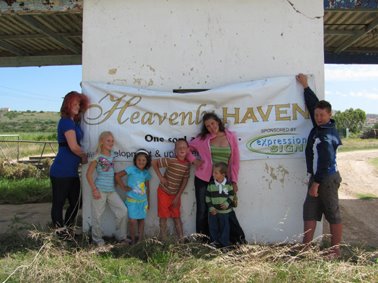
My husband and I work with a group of impoverished people in the Garden Route. These people are from all walks of life, and have one thing in common – poverty. Every day is a struggle for basic needs. Things we take for granted. Money for prepaid electricity, where the next meal comes from, warmth in winter and shelter at all times.

Our organisation is called Heavenly Haven, and we have a fairly updated facebook page: http://www.facebook.com/havenheavenly. We post regular updates on what we do and what we need. And daily we are confronted by an overwhelming awareness that what we are doing isn’t even minimising the tip of the iceberg.

Image

We love doing what we do, and we love seeing the smiles on especially the children’s faces when we arrive with food, clothes, toys – things that children should have.

And this brings me to the topic of this blog. Today one of my moms contacted me about her own father. He is in his late fifties, and he sleeps on a collection of crates in a small boarded room. She washes his clothes, and see his underwear crumble to rags in her hands. Her appeal to me was shy and tentative – she didn’t know how to ask.

I was asked for nappies by a mom who has a 2-month old baby. Again – not a demand. A shy appeal for help for her child.

A grandmother approached us and asked if we could help her with a set of teeth – she has a toothless, friendly smile. And again – it took her weeks to get the courage together to ask.

Our impoverished families have another trait in common – pride. These are ordinary people, with ordinary lives. They have ordinary needs, and are not used to asking for and accepting help. Often, especially our older people, they will rather starve than ask for food.

We must reach out in a loving way that preserves the dignity of people less fortunate than us. Our approach cannot be higher-handed or “know-it-all”. We must change our thinking so that our approach is almost from a heart who is blessed with the opportunity to be of service.

Heavenly Haven has many needs. We cannot look after our families on our own. We need food, we need clothes, we need willing hands to help, but above all, we need humble hearts who want to give with love.