Regret is a non-splendoured thing

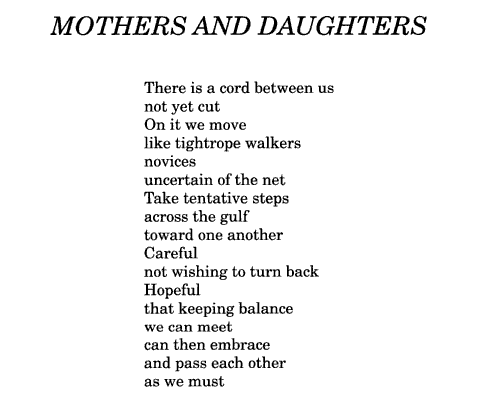
I got a call late yesterday morning- the one when the phone rings, you recognise the number, and your heart plummets in your chest, because news has not been good lately, and you dread what you’ll hear when you answer. My mother passed away. Just like that. My closest blood relative, the person who brought me into this world, who gave me life.

Yes, I understand the irony of how I feel. I am an adoptive parent. I did not want children for many years, because I had such a tumultuous and abusive relationship with my mother. I was worried that I might turn out the be the same kind of mother, and I’d wish that on no child. And by the time I knew better, and I really yearned for children of my own, this is the route that worked out for me.

Somehow people think when you’ve lost an estranged parent, it is ok. You didn’t have much of a relationship with them, so why be sad? It is much much more complicated than that. I didn’t realise I’d feel this overwhelming grief. I manage to get my tears under control, only for it to all start up again at a thought, a smell, a word. My way of dealing with emotions is to do something, to cook, to write, to make something.

It is tough growing up without a mother. I had a person in my life, who gave birth to me, but who was in no way what a mother personifies. There was no love, no nurturing, no hugs, no care. Today, I wonder if she didn’t have postnatal depression, and was never diagnosed. But that doesn’t explain the constant abuse. I was eventually removed by social workers into state care when I was fifteen, and pretty much made my own way from there. That was 30 years ago.

It goes beyond explanation, but I constantly went back to try and remedy the situation. When I matriculated, I begged for a lift, and I made my way to where she lived. I wanted to share with her that not only did I matriculate top of my class, but I also got a very rare and much-needed bursary to go to university. When I knocked, and she saw it was me, her exchange with me was bitter. She told me in no uncertain terms that I am nothing to her.

It is tough entering the adult world without a mother. I’ve always had caring people who stood in the place she should have been, but it is not the same. I envied girls who had easy access to a mom to teach them everything they needed to know about transitioning into an adult. How to wear make-up, how to handle suitors, how to wear jewellery, appropriate clothes for specific events. Someone to giggle with about silly things, someone to whisper my dreams to who gave me complete support. Someone who stood up for me when I couldn’t on my own, who took my side when I needed an ally, who anchored me when seas got rough.

So yes, I yearned for a mother. I constantly tried to reconnect, and when I got married, I went to introduce my new husband to my real family, so he could be under no misunderstanding as to my origins. Poor, and from the complete wrong side of the tracks. We actually ended up staying with them for a few days – things seemed to be going smoother.

When my marriage fell apart, I went to fetch my mother to come and stay with me for a few days. I really just needed comfort and companionship. Comfort she had no idea how to give, companionship, she tried her best. It felt as if we were cautiously feeling our way towards each other.

Over the years, depending on my own income, I’d send money, or help buy whatever was needed: a fridge, a stove, groceries, essentials. It reached a point where it started feeling my mother would just contact me when she needed money or when she needed me to get something for her.

Our fragile relationship shattered to pieces again when I reopened our old wounds, and tried to explore why she abused me so badly as a child. She denied completely that anything of the sort had happened, shut herself off from all communication, and I left, angry. We went back and forth like this for years, with me just wanting answers and to understand, and with her completely denying that anything of the sort had happened.

It took me having children of my own before I finally understood. I could not force my mother to love me, or to even give me any answers or closure. Also, I was not to blame for what happened to me as a child, I did not fail in any way. There is nothing I could have done better, or differently. I was a child, she was the adult. If I wanted any kind of relationship with her, it would have to be unconditionally.

Last year I packed up my twins and off we went to Queenstown for a visit over the festive season. I hadn’t seen my mother in fifteen years by then, and I was worried that the visit would be strained. And yes, of course it was. My mother could not make eye contact with me, and for the first couple of days she spoke to me via other people. Like: “Eddie, ask Jolindy if she wants coffee”, or “Imelda: I think Jolindy needs a chair.” But I could see she was trying. She kept an eye on me and when she thought I needed something, she’d get someone to sort it out. And I just went back, day after day, relentlessly.

By now, my mother could not walk properly. A hip replacement from many years ago started failing, and she was in line for a wheelchair. She smoked non-stop, and sat at their little kitchen table, from where she ran their little household. It was hard, to go sit at that table, all day, every day. I had brought lots of activities for the twins, and they were happy and entertained with puzzles and toys. But that time sitting at that table turned out to be most valuable. I let go of my questions about her motherhood and my childhood. I forgave her, and I embraced her as to who she turned out to be.

From there, I spoke to her almost every day telephonically, and the twins embraced her as “Ouma”. She loved it, and she told them she loved them. She couldn’t say it to me, but I could hear she wanted to. As to me, I struggled to articulate the word “Mom”. I’d avoid calling her anything, and structured my sentences to her so there was no form of address. It was hard, the word stuck in my throat. I am happy that during our last conversations I did manage to work it in.

My mother and Eddie were supposed to come and visit us at home in George over the Easter period. I had booked and confirmed their tickets, and we were all ready for them with planned treats and outings. She was so excited. A week before they would have come, she let me know that she got her wheelchair, and she would be able to be more mobile. Our Covid-19 figures started growing, and a travel ban was imposed, not only on international travel, but also on all domestic travel. We took it in our stride, and said as soon as all of this is over, we’ll have our visit. It was her birthday three weeks ago – she still reminded me, as if I’d ever forgot. April 10, every year, I have always thought of her in some way. This year I bought her a much-coveted tea set, that we were going to put in their bedroom as a surprise when they came.

The call that she was hospitalised happened just over a week ago. I frantically called the hospital for more detailed news, because my mother’s husband, Eddie, seemed to have no idea what was happening, and my brother, Jan, was in a state. I could get no information, because I could not verify telephonically that I am next of kin. The hospital explained I have to be there in person. There was no way I would be allowed to travel, the country was in the middle of our most severe level 5 lockdown, and my mother was hospitalised in another province. The police just said no to a travel permit, funerals only. I might now to be allowed to travel, as soon as a death certificate is issued, I’ll have to apply. I tried yesterday with our documents and an affidavit, but it was a firm no.

A kind doctor finally got back to me and explained the severity of the situation. Stage 5 cancer, very aggressive. A stroke as well. My mother was in a lot of pain and unable to speak. Swollen hands, unable to hold a phone. I had to communicate via Eddie. Due to a broken car and financial issues, he could also not visit her daily, so updates were few and far between. The prognosis looked bleak. I did not know when she had been discharged, the last I heard from the hospital, my mother was supposed to go by ambulance to the nearest oncology clinic.

And now, she has passed away. Peaceful, it seems, in bed, next to her husband, in the small hours of the morning. I never got to say goodbye, or to even hug her. I don’t know what she would have made of a hug, she was not really a demonstrative person. There will be no more chances for further reconciliation, no more time just sitting with her, quietly listening to her, talking about inconsequential stuff, but talking. Eddie told me she could not stop talking about our visit over Christmas. It was all she wanted, it gave her peace. I regret not having let go of my resentment years ago, and just letting us develop an adult relationship.

Loss is a complicated thing. And so is grief. There is this huge hole inside of me, and my eyes keep on misting up and I have to delete and retype. Estranged or not, she was my mother. And I miss her more than I ever knew I would.
Physical distancing, Social Togetherness #LockDownSA Day 15

Day 15 LockDown

10 April 2020

2003 cases
Recovered: 45
Deceased: 18

It is Good Friday today – a time of hope, of recovery and of rebirth. This is a part of the message conveyed by our President, Cyril Ramaphosa, when he addressed us as a nation last night and announced that the lockdown is going to be extended by another three weeks. This is a message that we desperately need in this time of insecurity and fear. We shall recover, says our President. We shall overcome.

There was a time, as a teenager, when I worked in a town called Sterkspruit at the Cash & Carry on Saturdays for some extra cash. Our country was in turmoil. We had international sanctions against us. The army had to accompany us to protect us against flying bullets, necklacing, protests, molotov cocktails thrown at moving vehicles and more. It was like driving through a war zone. Our country was being reborn, with rights and equality for all. It was a difficult time, and yet we made it.

Now, we are in this crisis together as a global people. The virus is everywhere, affecting everyone. I support our President, and the hard decisions he has to make. I just have to ask – what about when we reach the end of April? What about even later, towards June? The virus will still be around. I read an article that claims intermittent physical distancing will still be around until at least 2020. According to this article:

With much of the world struggling financially and mentally in self-isolation and lockdowns, people around the world are undoubtedly looking forward to the end of such unprecedented measures.

But according to analysis by Harvard researchers, the best strategy for beating COVID-19 probably isn’t one extended period of physical distancing, but several staggered periods, with time in between to allow immunity to take hold in the population.

The research posits that this strategy could “avoid overwhelming hospitals while allowing immunity to build in the population.”

Extending this lockdown for longer and longer will have a devastating and difficult to recover from effect on our economy. Businesses are forced to close. Debts can be paid, rent, credit cards, vehicles, property – the list is endless. The Rupert and Oppenheimer funding initiatives, has in the interim closed down temporarily because applications reached capacity. The government funding applications seems biased towards specific business types, and not all businesses currently in trouble qualify to apply. Here’s a list of some of the assistance available: https://smesouthafrica.co.za/the-small-business-covid-19-survival-guide-where-to-get-help/

I don’t have any answers. What I do know, is that we’ve been through hectic periods before and survived. We cannot just give up. Giving up means we’ve already lost.

The Speech:

President Cyril Ramaphosa: Extension of Coronavirus COVID-19 lockdown to the end of April

9 Apr 2020

My Fellow South Africans,

At midnight tonight, it will be exactly two weeks since our country entered into an unprecedented nation-wide lockdown to contain the spread of the coronavirus.

During the course of these last two weeks, your lives have been severely disrupted, you have suffered great hardship and endured much uncertainty.

We have closed our borders to the world, our children are not in school, businesses have closed their operations, many have lost their income, and our economy has ground to a halt.

And yet, faced with such daunting challenges, you, the people of South Africa, have responded with remarkable patience and courage.

You have respected the lockdown and largely observed the regulations.

You have accepted the severe restrictions on your movement and many of the daily freedoms that we all take for granted.

You have done so because you have understood the devastating effect that this disease will have on the health and well-being of all South Africans unless we take drastic measures.

You have also understood that we must do everything in our power to prevent the massive loss of life that would occur if we did not act.

For your cooperation, for your commitment and above all for your patience, I wish to thank you personally.
I wish to thank you for reaffirming to each other and to the world that we South Africans are a people who come together and unite at moments of great crisis.

Earlier today I had a most productive meeting with our Premiers about the work they are doing in provinces and districts to stop the spread of the virus.

I also had a discussion with the leaders of all our political parties represented in Parliament, who collectively pledged their support for the efforts that are being made to combat the pandemic.

Through this we are demonstrating that we are able to work together across party lines to confront a common threat.

Since I announced the lockdown just over two weeks ago, the global coronavirus pandemic has worsened.

Two weeks ago, there were 340,000 confirmed coronavirus cases in the world.

We now have over 1.5 million confirmed cases worldwide.

Over 90,000 people across the world have died from this disease.

The health systems of many countries have been overwhelmed.

Even the most developed economies in the world have not had the means to treat the many thousands who have fallen ill.

They have struggled to find the medical supplies and personnel necessary to deal with the pandemic.

The devastating effect of this is that many people have died.

The global evidence is overwhelming.

It confirms that our decision to declare a national state of disaster and to institute a nation-wide lockdown was correct and it was timely.

While it is too early to make a definitive analysis of the progression of the disease in South Africa, there is sufficient evidence to show that the lockdown is working.

Since the lockdown came into effect, the rate at which new cases have been identified here in South Africa has slowed significantly.

From 1,170 confirmed cases on the 27th of March, the number of confirmed cases today stands at 1,934.

In the two weeks before the lockdown, the average daily increase in new cases was around 42%.

Since the start of the lockdown, the average daily increase has been around 4%.

While we recognise the need to expand testing to gain a better picture of the infection rate, this represents real progress.

The measures we have taken – such as closing our borders and prohibiting gatherings – as well as the changes that we have each had to make in our own behaviour, have definitely slowed the spread of the virus.

But the struggle against the coronavirus is far from over.

We are only at the beginning of a monumental struggle that demands our every resource and our every effort.

We cannot relax. We cannot be complacent.

In the coming weeks and months, we must massively increase the extent of our response and expand the reach of our interventions.

We are learning both from the experiences of other countries and from the evidence we now have about the development of the pandemic in South Africa.

Both make a clear and compelling case to proceed in a manner that is cautious and properly calibrated.

Simply put, if we end the lockdown too soon or too abruptly, we risk a massive and uncontrollable resurgence of the disease.

We risk reversing the gains we have made over the last few weeks, and rendering meaningless the great sacrifices we have all made.

Fellow South Africans,

This evening, I stand before you to ask you to endure even longer.

I have to ask you to make even greater sacrifices so that our country may survive this crisis and so that tens of thousands of lives may be saved.

After careful consideration of the available evidence, the National Coronavirus Command Council has decided to extend the nation-wide lockdown by a further two weeks beyond the initial 21 days.

This means that most of the existing lockdown measures will remain in force until the end of April.

We will use the coming days to evaluate how we will embark on risk-adjusted measures that can enable a phased recovery of the economy, allowing the return to operation of certain sectors under strictly controlled conditions.

We will also use this time to ramp up our public health interventions.

We did not take this decision to extend the lockdown lightly.

As your President, I am mindful of the great and heavy burden this will impose on you.

I am keenly aware of the impact this will have on our economy.

But I know, as you do, that unless we take these difficult measures now, unless we hold to this course for a little longer, the coronavirus pandemic will engulf, and ultimately consume, our country.

We all want the economy to come back to life, we want people to return to work, we want our children to go back to school, and we all want to be able to move freely again.

But our immediate priority must remain to slow down the spread of the virus and to prevent a massive loss of life.

We must do this while preventing our economy from collapsing and saving our people from hunger.

We are determined to pursue a path that both saves lives and protects livelihoods.

Our strategy is made up of three parts:

–    Firstly, an intensified public health response to slow down and reduce infections.

–    Secondly, a comprehensive package of economic support measures to assist businesses and individuals affected by the pandemic.

–    Thirdly, a programme of increased social support to protect poor and vulnerable households.

As government, together with our many partners, we have used this lockdown period to both refine and intensify our public health strategy to manage the coronavirus.

Our approach is to screen in communities and test people in hospitals, clinics and mobile clinics, to isolate those who are infected, and to care for those who are ill in our health facilities.

We need to do this intensively and systematically.

We have used the last week to develop our screening and testing methodology in various parts of the country.

Over the next two weeks, we will roll out the community screening and testing programme across all provinces, focusing in particular on highly vulnerable communities.

Those who test positive and cannot self-isolate at home will be isolated at special facilities that have been identified and are now being equipped.

At all times, we will observe the human rights of all people.

Let us not discriminate against people who test positive.

To ensure that our strategies are effectively coordinated and to ensure they are informed by comprehensive, real-time data, we have established the COVID-19 Information Centre at the Council for Scientific and Industrial Research.

This world-class centre will keep track of all screening, testing, isolation and hospitalisation throughout the country.

It is already identifying infection hotspots.

It is following the spread and the severity of the disease, and enabling us to move our focus and resources where they are most needed.

We are working with mobile telephony companies and other institutions to locate those people who have tested positive for the virus and those with whom they have been in contact.

As part of the second element of our strategy, we have put in place various measures to provide support to businesses in distress, to workers facing loss of income, to the self-employed and to informal businesses.

Many of these measures are being taken up by both large and small businesses.

The Unemployment Insurance Fund has set aside R40 billion to help employees who will be unable to work, as part of the effort to prevent jobs losses as a result of the lockdown.

To date, it has paid out R356 million.

I would like to applaud all those employers who have continued to pay their workers during this difficult time, as well as those employers who are working with unions and government to assist their employees to access these benefits.

I would like to call on all businesses to continue to pay their suppliers, to the extent that they can, to ensure that those suppliers can also continue to operate and pay their staff and suppliers.

In this respect, I would like to appeal to all large businesses not to resort to force majeure and stop paying their suppliers and rental commitments, as such practice has a domino effect on all other businesses dependent on that chain.

We must do all we can to ensure that the underlying economy continues to function and to focus support on those small businesses that really need them.

The Industrial Development Corporation has set aside R3 billion for the procurement of essential medical supplies.

It has already approved R130 million in funding and expects to approve a further R400 million in the coming week to companies who applied for funding under this special facility.

The Small Enterprise Finance Agency has approved the postponement of loan repayments for a period of 6 months.

The small business debt relief and business growth facilities are currently adjudicating applications for assistance.

There is a total of R500 million available in support.

Government has reprioritised R1.2 billion to provide relief to smallholder farmers and to contribute to the security of food supply.

In addition to these expenditure measures, the Reserve Bank has also lowered interest rates and has taken measures to inject liquidity into the economy.

One of the biggest challenges that all countries in the world are facing is the shortage of medical supplies to fight the coronavirus.

As a country we have had to rely on our own capabilities to supply these goods, but have also had to source supplies from other countries.

In recent weeks, we have seen a massive mobilisation of South African business, labour, academics and government agencies to build the stocks of medical and other equipment needed to fight coronavirus.

We have, for example, established the National Ventilator Project to rapidly mobilise the technical and industrial resources of our country to manufacture non-invasive ventilators, which can be used to support patients afflicted with the disease.

Other projects are focusing on increasing the local manufacture of protective face masks, hand sanitisers and pharmaceutical products which can be used by health care workers and the public at large.

As the third part of our coronavirus response, we have been working to provide basic needs such as water and to maintain the reliability of food supply to the poorest South Africans.

We have also expanded the provision of food parcels and we’ve provided spaza shops with financial support.

To date, government has delivered over 11,000 water storage tanks to communities in need across the country, and many of these have been installed.

In addition, 1,000 water tankers have been provided for the delivery of water.

Several homeless people have been accommodated in 154 shelters.

I am pleased to report that the Solidarity Fund – which was established to mobilise resources from companies, organisations and individuals to combat the coronavirus pandemic – has so far raised around R2.2 billion.

It has already allocated around R1 billion to buy sterile gloves, face shields, surgical masks, test kits and ventilators.

It will also allocate funds for humanitarian relief to vulnerable households, in addition to the R400 million set aside by government for Social Relief of Distress grants.

All of these efforts, while necessary and commendable, will not be sufficient on their own to cushion the poor from the impact of this pandemic.

Nor will they provide the relief that businesses and their employees require.

Additional extraordinary measures will need to be put in place in the coming weeks and months to absorb the sudden loss of income to both businesses and individuals.

We are in a situation that demands swift action and exceptional methods, a situation that demands innovation and the mobilisation of every resource that we have.

Cabinet will be developing a comprehensive package of urgent economic measures to respond both to the immediate crisis and to the severe economic challenges that we must confront in the months ahead.

Further announcements on the next phase of our economic and social support strategy will be made in due course.

An essential part of our response to this emergency is the principle of solidarity.

From across society, companies and individuals have come forward to provide financial and other assistance.

In support of this effort, we have decided that the President, Deputy President, Ministers and Deputy Ministers will each take a one-third cut in their salaries for the next three months.

This portion of their salaries will be donated to the Solidarity Fund.

We are calling on other public office bearers and executives of large companies to make a similar gesture and to further increase the reach of this national effort.

In this regard, we welcome the donation of 20,000 cellphones by Vodacom for health workers that will be involved in screening and tracing in communities.

As we have stressed before and we will stress once again, our struggle against the coronavirus requires fundamental changes in behaviour from all of us.

Until we have contained the coronavirus, the same rules remain.

Shaking hands, hugging, sitting close to each other and other forms of physical contact enable this virus to be transmitted, and must be avoided.

We must continue to wash our hands regularly and thoroughly using water and soap or sanitiser.

To stay safe and to keep others safe we must continue to respect whatever restrictions that are placed on our movement and on our daily lives

Over the past two weeks, I have been speaking to other African leaders about a coordinated continental effort to combat the coronavirus and support our people and our economies.

We have established an AU COVID-19 Response Fund to mobilise the resources necessary to support this effort.

We have reached out to world leaders, even as they struggle with the pandemic in their countries, to assist the continent with essential medical supplies and to support a comprehensive stimulus package for Africa.

As we confront this disease in our country, we are part of a great global effort that is bringing humanity together in ways that many never thought possible.

For billions across the world, and for us here in South Africa, the coronavirus pandemic has changed everything.

We can no longer work in the way we have before.

As government, as NGOs, as political parties, as large corporations and small businesses, as financial institutions, as community organisations and as South Africans we will need to adapt to a new reality.

As we emerge from this crisis, our country will need to undergo a process of fundamental reconstruction.

To do so, we will draw on our strengths: our abundant natural resources, our advanced infrastructure, our deep financial markets, our proven capabilities in information and communication technology, and the depth of talent among our people.

We will draw on our proven capacity for innovation and creativity, our ability to come together in a crisis, and our commitment to each other and our common future.

We will learn from global experience and the best scientific evidence, but we will craft a uniquely South African response that uses our own capabilities as a nation.

This weekend is a sacred time for many South Africans.

For many, it will be difficult to spend this time without their friends and family.

I ask that you keep in your thoughts tonight all in our land who are vulnerable, destitute and alone.

I ask that you give what you can to alleviate their burden.

To contribute to the Solidarity Fund in any way you can.

This is a difficult time for us all.

Yet the message of Easter is one we carry in our hearts tonight.

It is the message of hope, of recovery and of rebirth.

As we walk this road together, as we struggle to defeat this pandemic, we remain strong and united and resolved.

Much is being asked of you, far more than should ever be asked.

But we know that this is a matter of survival, and we dare not fail.

We shall recover.

We shall overcome.

May God bless South Africa and protect her people.

I thank you.

Physical distancing, Social Togetherness #LockDownSA Day 8

Day 8 LockDown

3 April 2020

1462 cases
Recovered: 31
Deceased: 5

When lockdown started, we were already as a family semi-locked down. The schools closed a couple of days before, and I stayed away from public spaces and with the twins as much as possible. It seems like so far ago, and I remember getting my mindset all optimistic and positive about all the unfinished projects that we can finally complete. New hobbies to tackle, maybe learn a new language. An opportunity for mental self-enrichment and positive change.

Although we’ve done some of these, for instance I’ve become pretty proficient at crocheting circle boleros, and have made two child-sized ones already since lockdown, we’ve done some craft activities, we finally got rid of a massive and very ugly cement fountain in the middle of the staircase (next to it, like an atrium), I’m getting pretty creative in the kitchen as well, surpassing even my own expectations, it still feels as if we’re treading water. Or treading molasses. With no land in sight. Today again there was mention of maybe extending lockdown.

This morning, as I tried to figure out how to use a never before used and several years old Kenwood Mickey Mouse Slush Puppy maker (I have no idea why we own it, why we bought it, and can for the life of me not remember wanting something so frivolous in my kitchen), I was feeling an overwhelming wave of hopelessness. It is a stupid little machine, and really does not seem all that hard to figure out, but it hit me right between the eyes that there is nobody I could quickly call and ask to come over to show me. I looked online, and there was for once not one helpful video on YouTube. Eventually I figured out how to take the lid off, I chucked some ice cubes into the cavity, added some red food colouring, pressed a button, and added a couple of spoons of Oros to the shavings that came out to vaguely resemble the twins’ favourite order at John Dory’s. Needless to say, they loved it. I feel as if I survived a boxing match. Never promise children anything if you are not 100% sure you can deliver – a lesson I keep on learning.

Yesterday was a tough day for me. I write these blogs in the morning (sort of an eat that frog thing), which means I look back on a day before mostly. My mother, with whom I only recently reconciled, was admitted to hospital for a biopsy from her left breast. And with all the backlog on Covid-19 tests, apparently she’ll only have her results in two to three weeks. My mother was supposed to come and visit us now, during Easter, and obviously the lockdown put a stop to that. She had a stroke a couple of weeks ago, and my brother called me in an absolute state. It took me a while to just calm him down and explain that a stroke can be managed. The urgent biopsy on top of that was just a bit much for him. He is very close to my mother, always has been. I am the older of the two of us. My mother had undiagnosed postnatal depression when I was born, and it was tough being raised by her. There was a lot of abuse and rejection, and I was semi-removed from her care and put in the school hostel during the week at the age of 10, and eventually completely removed and taken to a different town altogether when I turned 15. Social Services was involved for most of my life as a child, either to feed us, give us clothes, provide counselling or take care of me until the day I turned 18. My mother seems not to remember much of those years, and I have moved on. Life is short, and we can either let our past overwhelm us, or we can learn from it.

Last night I had an overwhelming urge to watch a couple of natural disaster movies. We ended up watching The Day After Tomorrow, and 2012. Suddenly the premise of these movies seemed very real to me. I never before this virus thought that a government official would actually in real life say something like: This would never happen to us. This is happening, very much, to all of us. And as a South African, I am proud of the decisive action our President is taking. I have no idea where this action is taking us as a nation, and what it will mean for our business and many other small businesses, but action is better than a head in the sand approach.

Today I am grateful that I am surrounded by so much love. I have made peace with who I am, who I was and my life choices. If given a choice, there is nothing I would do differently in the almost 45 years on this planet – all the actions, all the choices, everything, has made me who I am and brought me to this day. Life has been an interesting ride so far, and if all is not ok, it is definitely not the end yet.


7 Ways to stop arguing with your other half

Successful relationships require a lot of work. As I’m writing this, I’m certainly not in the middle of a perfect relationship myself. The advice in this article is as much for me as for anyone willing to read it. I’d love some feedback from you – please feel free to comment or to add some of your own advice. This is by no means a comprehensive solution to a smooth relationship.

1. LISTEN

The most important action in any relationship is to listen. When your partner speaks, you need to really hear what he/she is saying and try to see the situation through his/her eyes. Put yourself on pause in order to really do this well. Focus on the moment and take in as much information as you can. Listen and ask questions until you feel you can see what your partner means.

2. TREAT PEOPLE THE WAY THEY WANT TO BE TREATED

The old adage of “do unto others as you would have done unto you” is really not applicable in relationships. Which means it really is not applicable at all, because we’re always in some kind of relationship with someone. Point is, we are all different and we cannot treat people the way we want to be treated. We have to care enough to learn more about the people around us and treat them the way they want to be treated.

3. PATIENCE IS A VIRTUE

It may sound trite, but patience in relationships is very important. We are all human and we make mistakes. No matter how bright you are, or how spiritual you are, we all have bad days – there is nothing wrong with this. Part of working towards a successful relationship is allowing your partner to make mistakes, and being willing to work with them on their personal growth. A relationship is a journey between two people that has no real end and is pretty much always a work in progress.

4. BE REAL

Sometimes we find that it is very common to act different with friends and loved ones than you do alone or in public. However, part of being true to ourselves is to do our best to make these versions of ourselves as consistent as possible. Just be the real you as much as possible. Find common ground with your partner that is mutually interesting. Pretending to listen and be interested is definitely not being true to yourself, and very much harmful to your relationship. Just be honest.

5. ADMIT WHEN YOU ARE WRONG

This is a difficult one. It takes a lot of courage to admit when you are wrong. Tell your partner when you recognise that you said or did something hurtful.
“I see that when I said that, it could have caused pain in you.  I am very sorry for doing that.  I am working on how I word things and making sure that I am respectful of you and your feelings.”

6. GRATITUDE

Frequently thank your partner when you see them doing things for you. A little gratitude will go a long way, and of course encourage your partner to invest more in the relationship – because it is clear that you appreciate him/her and what he/she does for you. Everybody loves being appreciated.

7. OBSERVE

Just observe your partner – sometimes it is easier to see how your partner is feeling, rather than asking them. Sometimes people are not able to communicate their feelings, and this may lead to misunderstandings and unhappiness. Don’t just ignore a potentially negative situation and hope that it will go away. Sometimes it is easier to pretend that we don’t notice our partner is unhappy because we’re not feeling good ourselves, or we are busy or just plain lazy. Rather jump in and help your partner instead of asking if they need help.

Always remember, and I’m sure I’ve said this already – your ultimate goal is to be happy with your partner. To make your partner happy and to be happy. Conflict can always be resolved – it is not necessary to be stubborn, or always “win” an argument. Holding out for a win may actually mean that you’ve lost. A little bit of humble and a whole lot of love and acceptance goes a long way. I dedicate this article to my husband, Zac Dreyer.

How committed are you to your goals?

“It is our choices that show what we truly are, far more than our abilities.”
— J. K. Rowling in Harry Potter and the Chamber of Secrets

Today was our wedding anniversary. And, as with every date that celebrates a moment in time, or marks an occasion, it is a time for contemplation. At least for me.

I wondered at the fact that we reached this date against all odds. Obviously on the decision scale, staying together weighed more than splitting up. As with all change, there is a lot of stress involved when two people decide to live together. Two often very diverse lives are merged, sometimes with different values and definitely with different viewpoints and ways of doing things. Yet, because of love, we make it work. And it seems to be working fine, so far. We are both committed to making this marriage work, and that counts for a lot.

Marriage or even relationships in general, is not the only aspect of our lives that requires a level of commitment. Our choice of employment, our choice of residence, our health, our studies – the list is endless. The chance of success in all these areas seems unattainable – unless we are committed. And right there – there is the keyword: commitment.

The word commit comes from the Latin word committere, which means to connect, entrust. When we stand behind our words, we demonstrate commitment. Commitment exists when our actions meet the expectation of our words – when there’s a congruency between intent, words and action.

This commitment to one’s goals is most definitely the most important rule for success. Without it, we fall prey to procrastination, bad habits, laziness, rationalisation and a host of goal-defeating problems. Commitment is a strong word – much stronger than “agreement.” If I agree to meet you for dinner, I have three options: keeping my agreement, cancelling, or changing it. If I commit myself to meeting you, I will meet you no matter what.

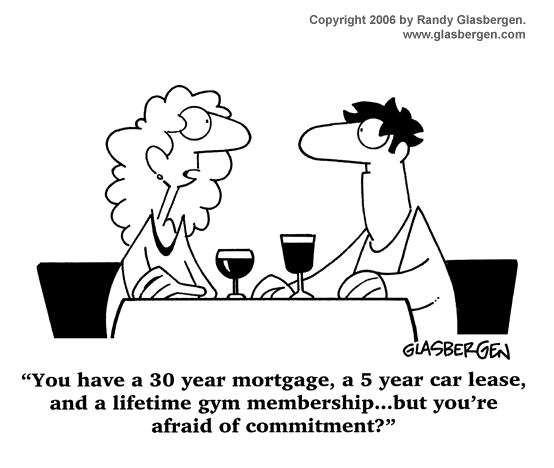
Why is commitment to our goals so difficult? We have even labelled this difficulty: commitment-phobia. It is an easy term to bandy about, especially when it comes to relationships. Fear of commitment in much popular literature refers to avoidance of long-term partnership and/or marriage but the problem is often much more pervasive, affecting school, work, and home life as well.

Commitment

Commitment fear/phobia is not only about balking at the idea of being in a steady, exclusive relationship. It is about not buying that house because of “what if”, or not embarking on a career or even a study direction. It is about not making good health choices, or not sticking to them.

When you are committed to your goals, attaining them is easier. Your choices are clearer. If your goal is to be the top salesperson in the company where you work, your actions will be congruent with this goal. You will make more calls, more appointments, and close more deals. You will put in more hours, because achieving this goal will mean more success and yes, more income, for you. Making those extra calls won’t be easy, but if your goal is clear, you will do it. If your goal is to shed extra weight, the choice between grated carrot and a chocolate cake won’t be so difficult. It is when you are not committed to your goals that choices appear to be hazy.

We are still here to celebrate our wedding anniversary not because we are still in love. There is that, but often love is not enough to wield against the petty conflicts. It is commitment that keeps us together through the darker times, and that reminds us that things have been better, and will get better.

Talk to us at Chrysalis Coaching about achieving your goals. About being committed to what you want. For an appointment, call Jolindy on 082 780 9209. For more info, please “like” our facebook page here: https://www.facebook.com/chrysalisnlp